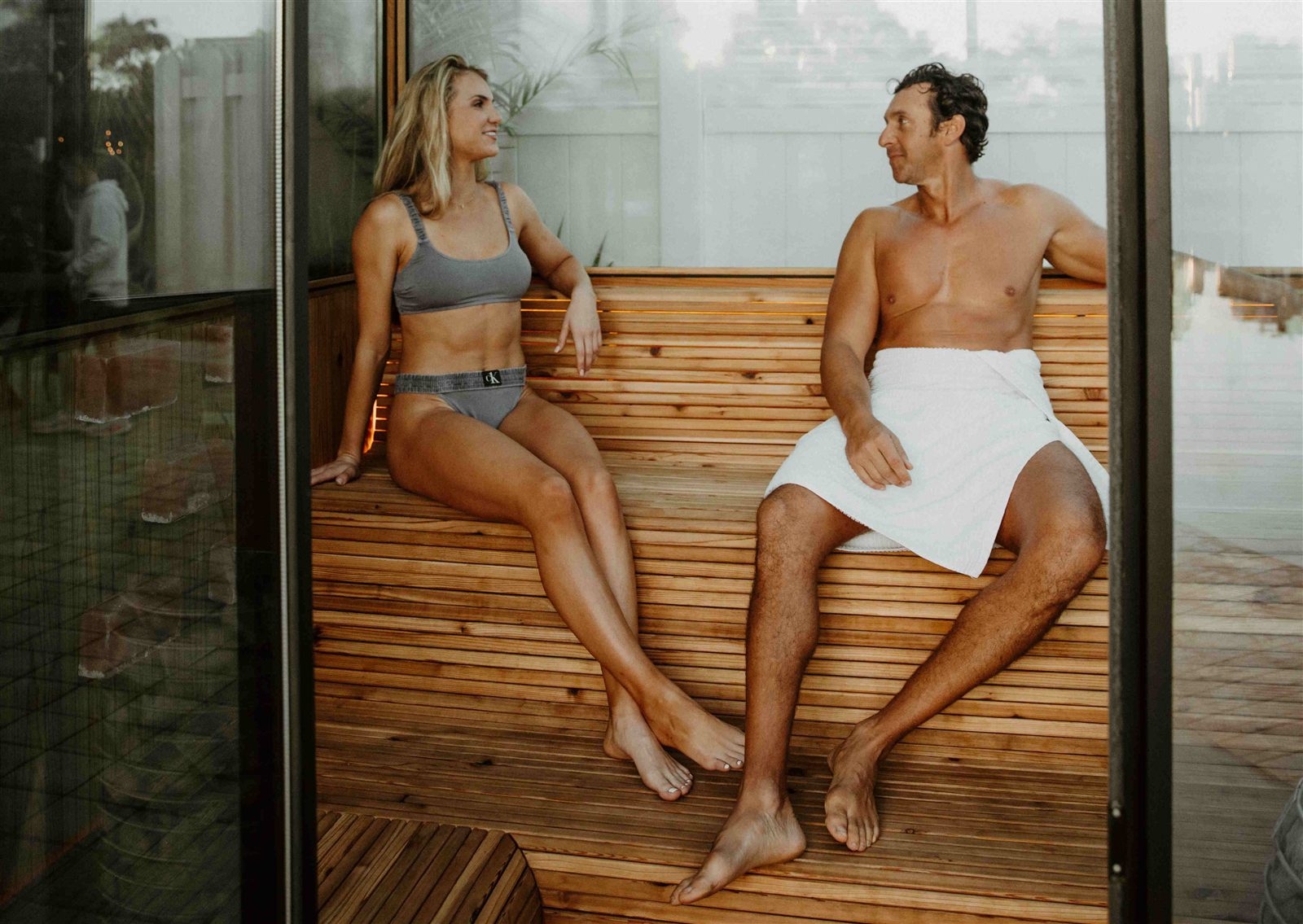
If you host often and you're tired of the bar cart being the most interesting thing in the room, contrast therapy — sauna and cold plunge together — has become a real social occasion, not just a solo recovery ritual.
Why Contrast Therapy Is Replacing the Bar Cart as the New Way to Host
Recovery has gone from a solo, clinical routine to a shared one. Reporting from Fitt Insider and the Global Wellness Summit on the surge of cold plunge and sauna use frames it directly: contrast therapy is becoming "a night out," and the specific intensity of alternating heat and cold seems to lower social barriers in a way gentler wellness activities don't — people bond over the shared experience of pushing through discomfort together.
"Social wellness clubs" — communal spaces combining heat rooms, cold plunge, and breathwork — have become one of the fastest-growing new venue categories, tapping into a real desire for connection, not just relaxation.
Why Rent a Private Spa When You Can Build Your Own?
A single private spa visit in the New York/New Jersey area typically runs $40 to $150 per person, depending on the venue — real examples include Great Jones Spa in NoHo (from $60 on weekdays), AIRE Ancient Baths in Tribeca (around $120 for a 90-minute session), and options like BRC Day Spa in New Jersey. That's a per-visit, per-guest cost, every single time you want to host this kind of evening.
A home wellness space built for hosting is a one-time investment that's available whenever you want it, for as many guests as it's designed to hold — no booking window, no per-person tab at the end of the night.
Designing the Space: Room for 6 to 8 Guests, Done Right
Sizing a hosting-scale sauna starts with the same math covered in How to Measure Your Space for a Home Sauna: budget 18 to 22 square feet of floor area per person. For 6 guests, that's roughly 110 to 130 square feet just for the sauna itself; for 8, closer to 145 to 175 square feet. The layout matters as much as the square footage — a wraparound or L-shaped bench that lets people face each other works for a group in a way a single-file bench built for solo use doesn't. Pair it with a lounge or recovery area between the sauna and cold plunge, since that's where the actual conversation happens between rounds.
What Makes a Hosting-Ready Wellness Space Different From a Personal One
A space built for one person prioritizes a quiet, private ritual. A space built for hosting needs clear sightlines between the sauna, cold plunge, and lounge area so a host can keep an eye on guests using the cold plunge — a real safety consideration when the cold shock response is new to someone, covered in full in Cold Plunge 101. It also needs to read as a lounge, with real lighting and materials, not just a wet utility room with equipment in it, and it needs to hold up to more frequent, higher-traffic use than a single household's daily routine.
Designed for the
guest count you actually have
Cielo is built around a simple idea: heat and cold exposure, used deliberately, is science associated with better cardiovascular health, faster recovery, improved sleep, and long-term resilience — not a spa-brand relaxation product. Designing for a group is a different brief than designing for one person, which is why Cielo starts with the actual guest count and the room you have, not a standard kit.
See Completed Projects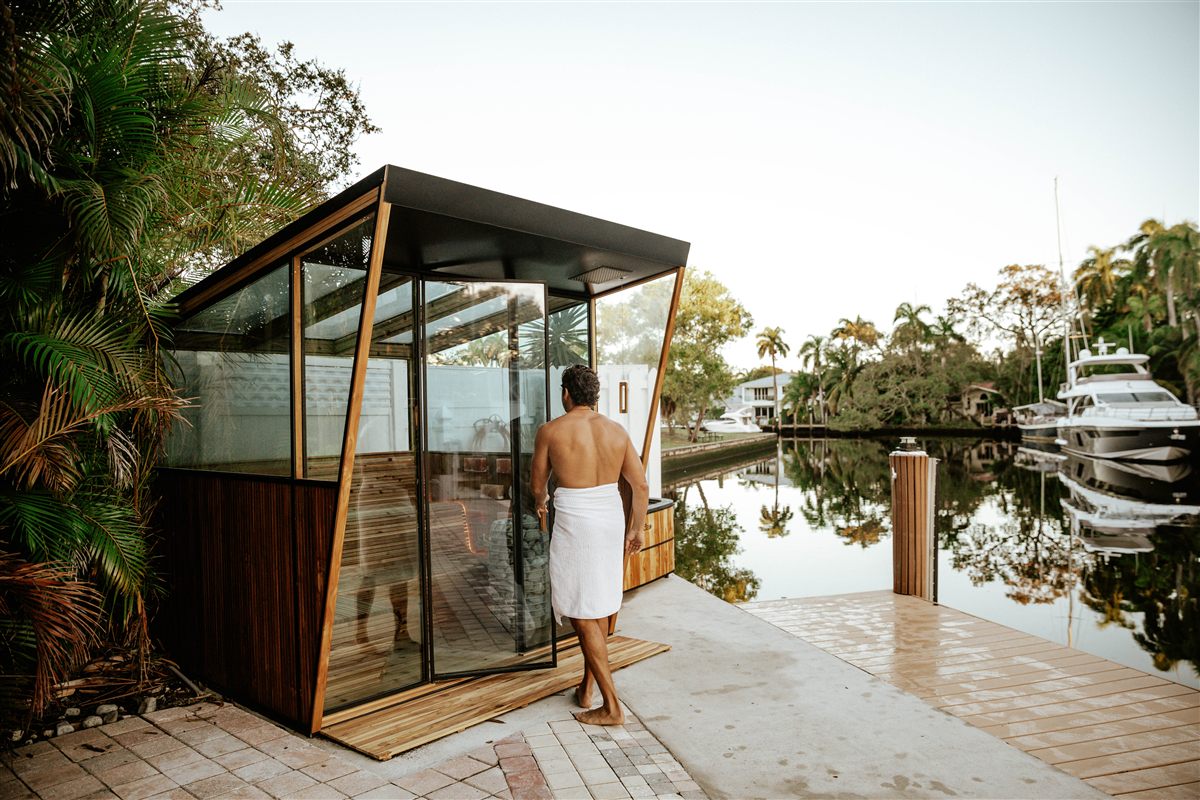
Frequently Asked Questions
It depends entirely on the build — a sauna sized at 18–22 square feet per person can comfortably seat 6 to 8 guests with the right bench layout, versus the 2–4 person footprint of a typical personal-use sauna.
It depends on how often you host. At $40–150 per person per visit for a private spa day pass in the NY/NJ area, hosting even a few times a year adds up quickly compared to a one-time investment in a space you own and control.
No — most hosting setups use one cold plunge with guests taking turns, similar to how a hot tub is shared at a gathering, while the sauna itself is sized to hold the full group at once.
Bench layout (facing inward vs. single-file), a connected lounge area for conversation between rounds, and clear sightlines to the cold plunge for supervision are the main differences from a solo-use design.
Yes, with the same precautions that apply to any cold plunge use — supervised, controlled entry, especially for first-timers experiencing the cold shock response for the first time.