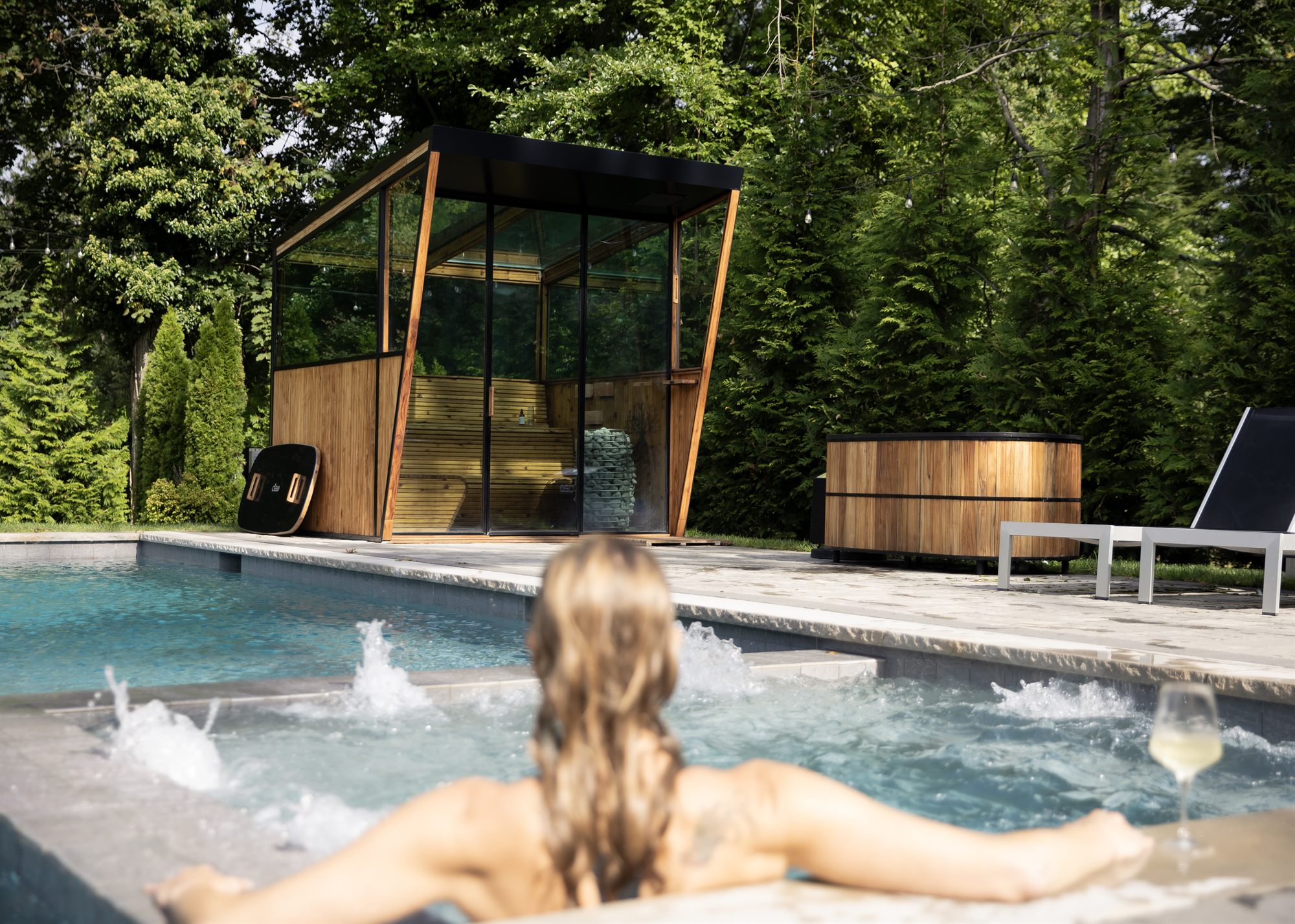
The moment that sells a glass roof sauna isn't a spec sheet — it's the first time someone sits down inside one at dusk and realizes they can see the actual sky changing color through the ceiling.
What Is a Glass Roof Sauna, Exactly?
A glass roof sauna is exactly what it sounds like: a sauna built with insulated glass walls or ceiling instead of solid wood on every side, so the experience stays connected to the sky, the trees, and the weather instead of sealing you into a box.
A glass roof sauna pairs Cielo's core materials — clear cedar, aluminum framing, insulated glass — in a layout where glass replaces one or more solid walls, or the roof itself, instead of being treated as a small viewport. The result reads less like a wood cabin with a window and more like a piece of architecture that happens to get very warm inside. It's the same category of build as a traditional cedar sauna structurally, with one deliberate change: sightlines out, instead of walls in.
Why the Sky View Changes the Experience
Heat alone is heat, wherever it happens. What a glass roof adds is context — watching snow fall while the room holds at temperature, catching the last light of a summer evening without stepping outside, or simply having a session that doesn't feel like being sealed off from the property you're sitting in the middle of.
This is the detail that separates a sauna used twice a year from one used as an actual daily ritual: the environment around it stays part of the experience instead of getting blocked out.
The Engineering Behind the View
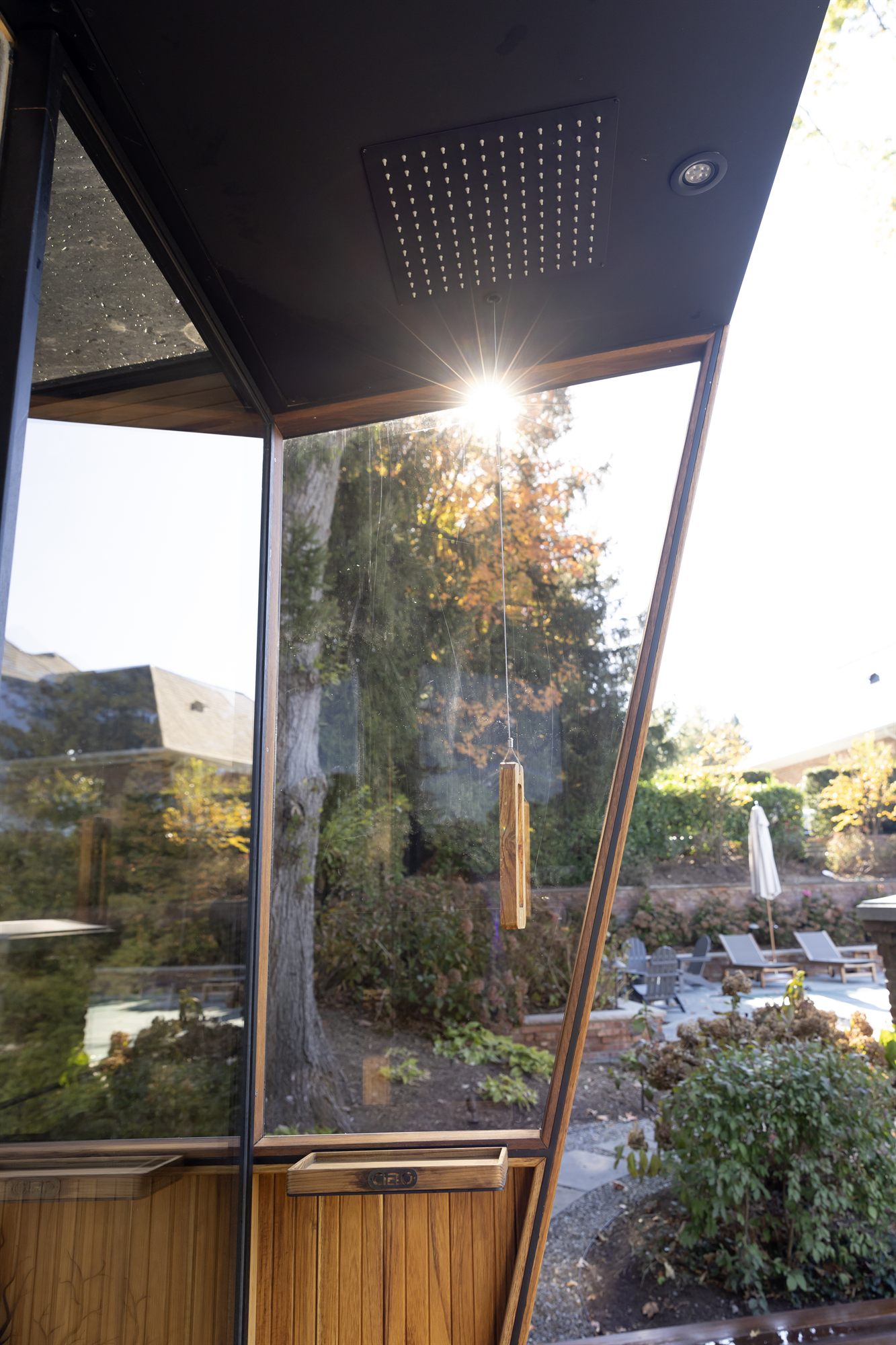
The obvious question is whether glass walls mean losing the heat a solid cedar wall would hold onto — and the honest answer is that it depends entirely on the glass, not on whether it's glass at all. A single pane of glass is a poor insulator, with roughly the thermal resistance of a basic window. Insulated glass units — two or three panes with a sealed, gas-filled cavity between them — perform in an entirely different category, cutting heat transfer dramatically compared to a single pane.
Cielo builds with tempered, insulated glass specifically for this reason: tempering adds strength and safety, and the insulated cavity is what actually holds the heat in. The glass isn't a compromise on performance — it's engineered to match it.
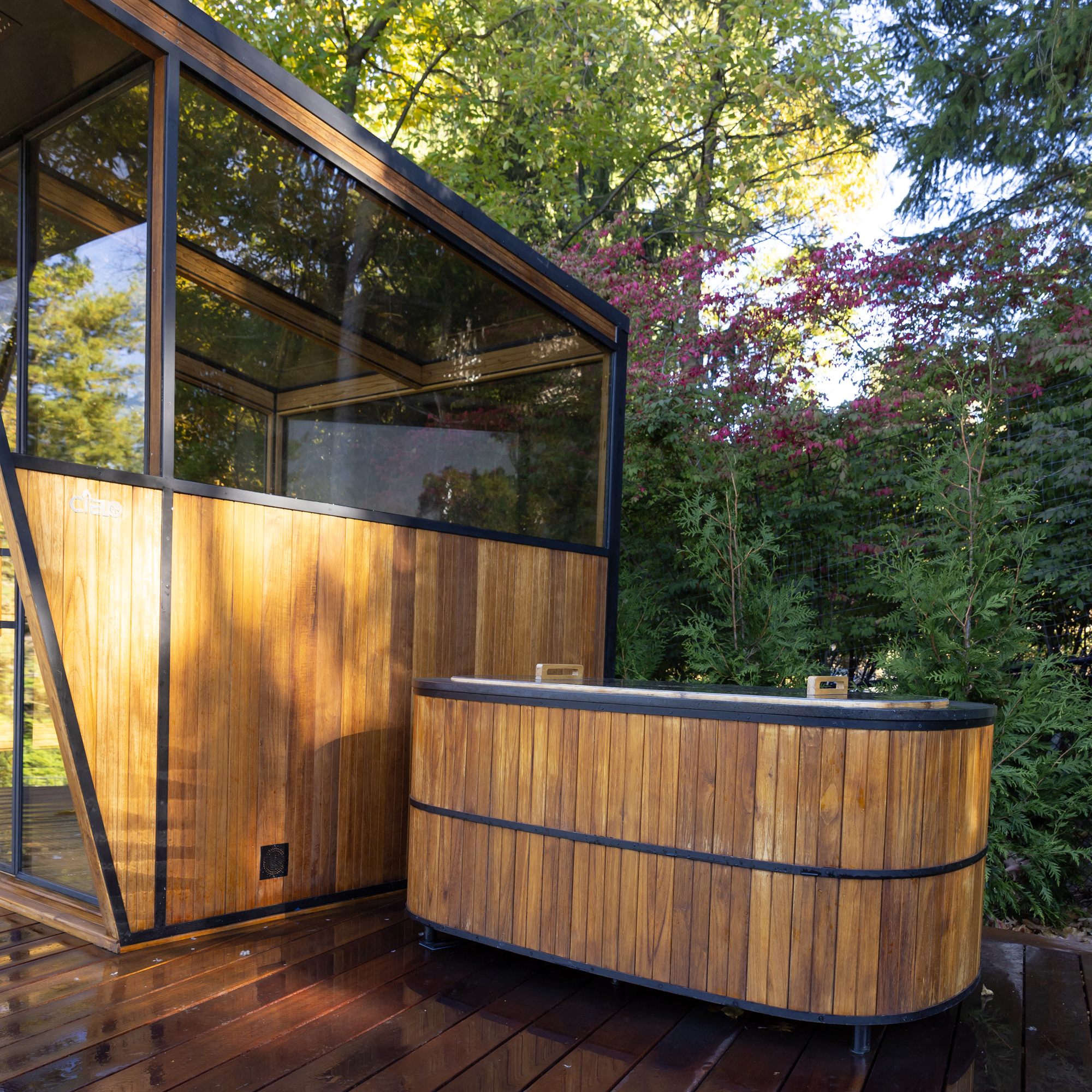
Cedar, Glass, and Aluminum: The Material Choice Behind the Look
None of these are arbitrary choices — each material is doing a specific job the others can't.
Designed for Every Season
A glass roof sauna isn't a summer-only feature. The same insulated glass that holds heat in during a January session is what makes a snow-covered roofline visible from inside without the room losing its temperature. Spring rain on the glass, the first real heat of summer, bare trees in late fall — the view changes constantly, which is a large part of why this design holds up as a year-round feature instead of a warm-weather amenity.
Built so the view
doesn't cost the heat
Cielo didn't add a glass roof as a trend — it's built around the idea that a recovery space should feel like part of your property, not a shed you disappear into.
Every glass roof build uses the same clear cedar, insulated glass, and aluminum framing as the rest of Cielo's line, engineered specifically so the view doesn't cost you the heat.
Explore Custom Builds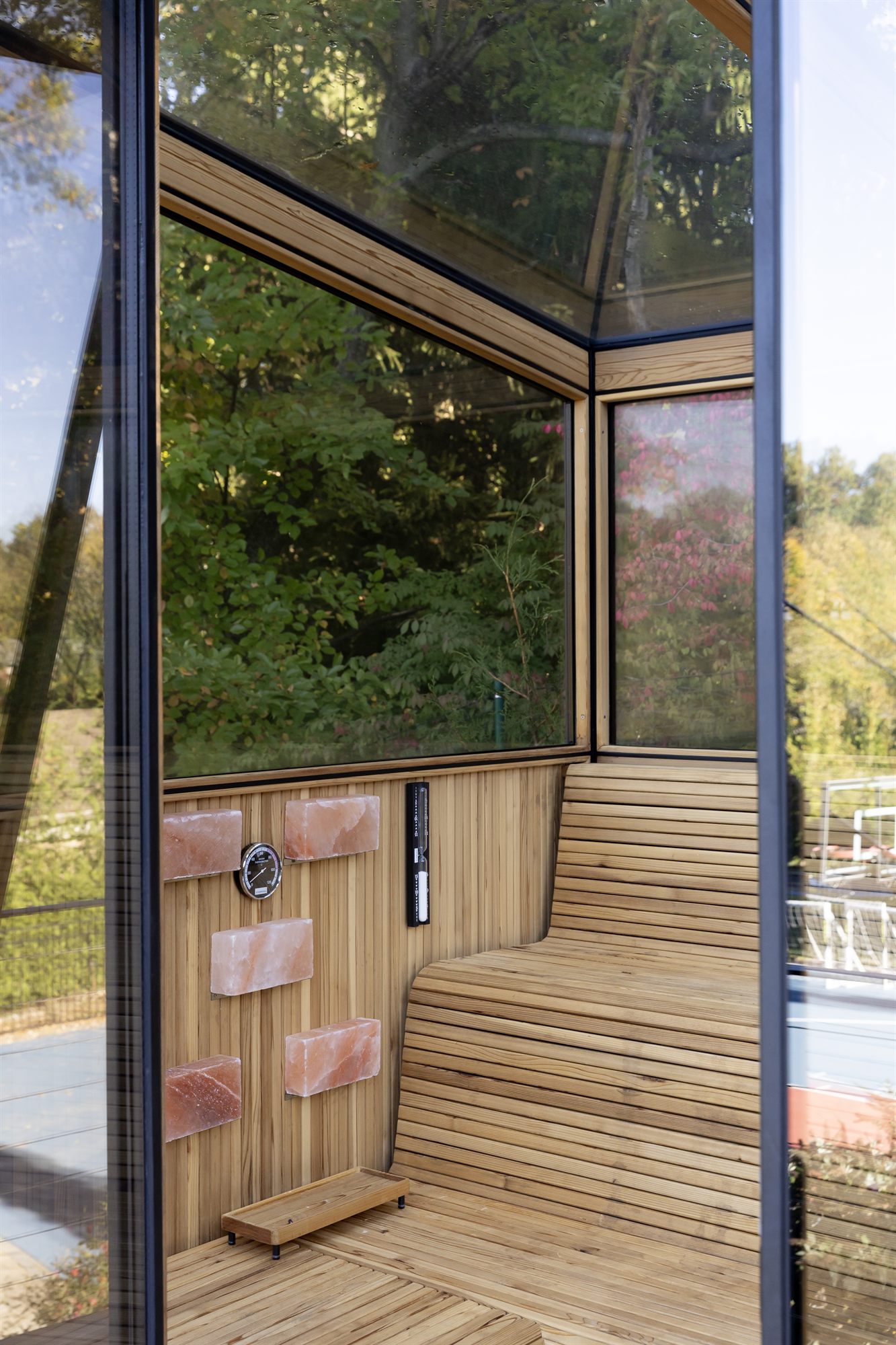
Frequently Asked Questions
Not meaningfully, as long as it's insulated glass rather than a single pane. Sealed, gas-filled insulated glass units perform far closer to a solid wall than most people expect — that's the specific reason Cielo builds with tempered, insulated glass rather than standard window glass.
Yes — the glass is tempered, meaning it's heat-treated for strength and safety, the same category of glass used in shower enclosures and architectural glazing.
Yes. The insulated glass is what makes it viable year-round, holding heat in winter the same way it does in summer, while keeping the sky and surroundings visible in every season.
Yes, Cielo designs each glass roof sauna to the property, from a single glass wall to a full glass roof, depending on the site and the sightlines worth keeping.
Insulated glass is typically the largest single material cost in a glass-forward build, so yes, it usually costs more than an all-cedar structure of the same size.
Insulated glass unit (IGU) thermal performance claims above reflect general building-science and glazing research, not Cielo-specific test data.