Most of the organisms that actually cause infection die within minutes at temperatures a sauna reaches easily. The bacteria behind gonorrhea, for instance, die within two to three minutes at just 50°C (122°F). That's a real, well-documented number, not a marketing claim. But "does heat kill bacteria" and "is a sauna sterile" are two different questions, and the honest answer to the second one is no: sterilization is a specific, much more extreme medical standard, and no sauna meets it. What sauna heat does do is real, measurable, and worth understanding on its own terms, because the actual science makes a stronger case than the word "sterile" ever could.
The Real Numbers: What Dies, and How Fast
According to research compiled by the Finnish Sauna Society and the University of Helsinki's Department of Public Health, the organisms most likely to cause a real infection are also among the least heat-tolerant:
- Gonococci (the bacteria behind gonorrhea) die within 2 to 3 minutes at 50°C (122°F)
- HIV is inactivated within 10 minutes at roughly 56°C (133°F)
- Staphylococci (a common cause of skin infections) die in around 20 minutes at 60°C (140°F)
- Dermatophytes (the fungi behind athlete's foot) die within 10 to 20 minutes at 50 to 80°C (122 to 176°F), depending on the specific species
A traditional dry sauna typically runs at 80 to 100°C (176 to 212°F), well above every threshold on that list, and for a full session, not just a few minutes. That's a genuinely strong hygienic environment. It's also not the same claim as "nothing can survive in here."
Why "Sterile" Is the Wrong Word
A sauna substantially reduces the organisms that actually cause infection. It doesn't meet the medical definition of sterile, and it was never really trying to.
In medical terms, sterilization is an absolute, specific standard: a validated process that eliminates every viable microorganism, including the most heat-resistant bacterial spores. Hospitals achieve it with an autoclave: pressurized steam at 121°C for a full 30 minutes, or 132 to 134°C for 4 minutes, according to CDC infection-control guidance. A sauna, even a very well-built one, runs at normal atmospheric pressure and doesn't approach those conditions. So no, a sauna isn't sterile, and any claim that it is would be overstating what's actually happening.
Sauna heat substantially reduces the organisms that actually matter for infection risk. It doesn't create a lab-grade sterile field, and it was never really trying to.
Here's the more accurate (and still genuinely reassuring) picture: the same Finnish Sauna Society research found that most of the bacteria that could plausibly cause a skin infection are killed well within a typical sauna session. What survives tends to be ordinary, heat-tolerant resident skin flora: bacteria that are already part of normal human skin, aren't very contagious, and can't penetrate healthy skin in the first place.
Heat Alone Isn't the Whole Story: Dryness Matters Just as Much
One detail from the same research is easy to miss: the gram-negative bacteria most associated with real hygiene problems in shared facilities (the kind found in tap water and on bathroom floors) aren't just killed by heat. They're killed by the combination of heat and dryness. That's precisely why those bacteria show up on a sauna's floor and lower benches but can't survive at bench height, where it's both hotter and drier.
A space that gets hot but stays damp, because of poor ventilation, condensation, or a heater that can't sustain temperature, never fully creates that hostile combination. Moisture control isn't a secondary detail in sauna design. It's half of what actually makes the heat work.
Why This Is a Design Question, Not Just a Heater Question
This is where the quality of the build actually matters. A poorly insulated sauna, the kind of prefabricated kit that loses heat through thin walls or an underpowered heater, doesn't hold a consistent 80 to 100°C. It cycles, drops when the door opens, and struggles to fully dry out between sessions, which is exactly the inconsistent, humid condition that lets bacteria and mold linger longer than they should.
A properly engineered sauna is built to do the opposite: sustained temperature, controlled humidity, and real airflow, session after session. Cielo's builds use the Cielo Smart Sauna System to hold temperature and humidity precisely, insulated glass and engineered ventilation to prevent the heat loss and condensation that undermine hygiene, and construction detailing that keeps moisture from being trapped where it can't dry out. You can see this approach applied across real, completed projects. The same engineering discipline that makes a sauna feel considered is what actually makes the heat hygiene claim hold up.
The engineering
behind the claim
Cielo is built around a simple idea: heat and cold exposure, used deliberately, is science associated with better cardiovascular health, faster recovery, improved sleep, and long-term resilience, not a spa-brand relaxation product. That same commitment to getting the science right, rather than the easy marketing claim, is why this article corrects "sterile" instead of using it.
Sauna & Cold Plunge as One System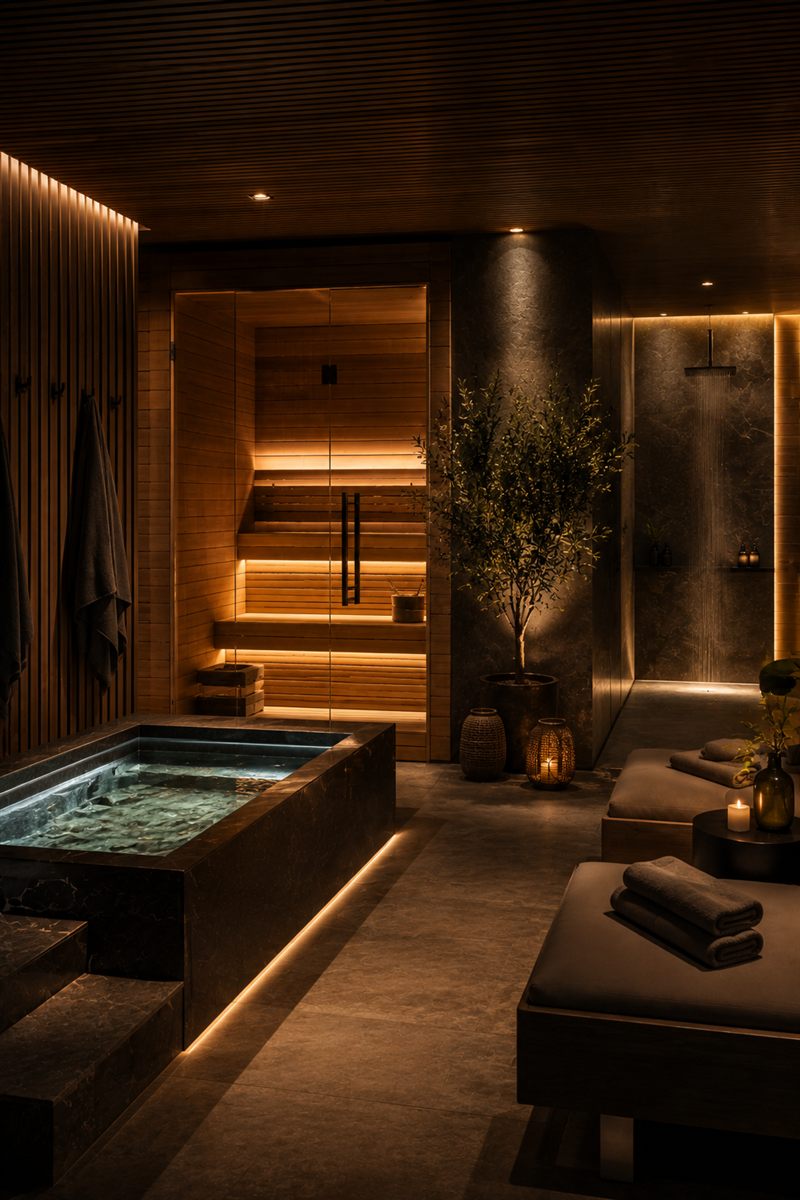
Frequently Asked Questions
Yes. Many disease-causing bacteria die within minutes at temperatures well within a normal sauna's range. Gonococci die in 2 to 3 minutes at 50°C, and staphylococci die in about 20 minutes at 60°C, according to published Finnish Sauna Society research.
No. True medical sterilization requires pressurized steam at 121°C or higher, sustained for a defined time: conditions no sauna produces at normal atmospheric pressure. A sauna substantially reduces the organisms most likely to cause infection; it doesn't create a sterile environment in the medical sense.
It depends on the organism. Gonorrhea-causing bacteria die at 50°C within a few minutes; HIV is inactivated within 10 minutes around 56°C; athlete's foot fungi die within 10 to 20 minutes at 50 to 80°C. A traditional dry sauna's typical 80 to 100°C operating range exceeds all of these thresholds for a full session.
It's uncommon. The bacteria that persist on sauna surfaces are mostly ordinary, heat-tolerant skin flora that aren't very contagious and can't penetrate healthy, unbruised skin. Basic hygiene, a towel barrier, especially in shared or public saunas, further reduces any risk.
The fungi that cause athlete's foot die within 10 to 20 minutes at 50 to 80°C, which is within a typical sauna's range. That said, dryness matters as much as heat; a sauna that stays damp between uses won't get the same benefit as one that fully dries out.
Not quite the same way. Infrared systems heat the body more directly and typically run at a lower ambient air temperature than a traditional dry sauna. See Traditional vs. Infrared: Which Heat Is Right for You for how the two compare.
Ordinary cleaning is enough for a home sauna used by one household; strong disinfectants generally aren't necessary and can be harsh on wood surfaces. For the full routine, see How to Clean and Maintain Your Sauna.