
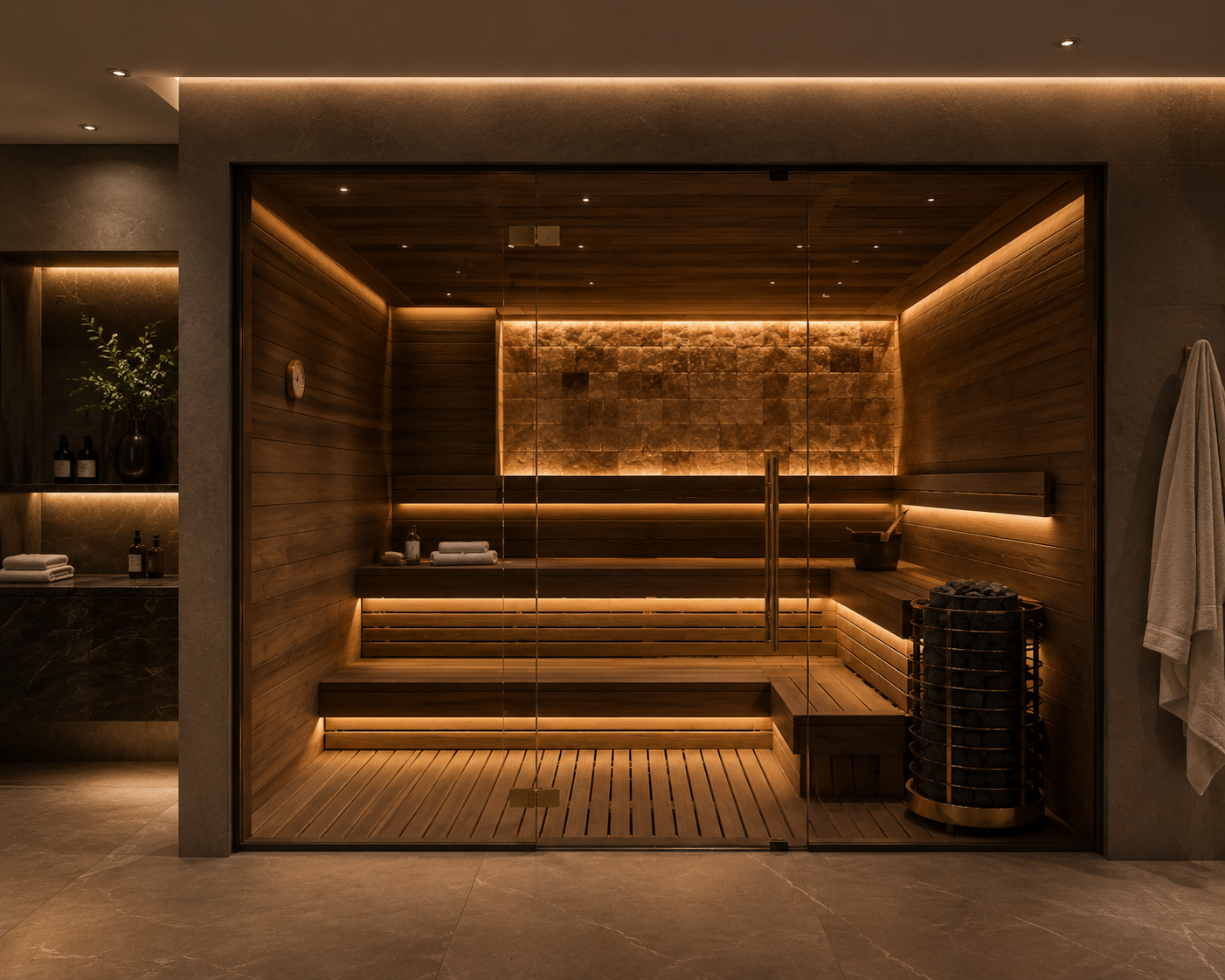
If you're an executive or high performer whose mind won't switch off at night no matter how tired your body is — sauna use doesn't sedate you, but it triggers the same core-body-temperature drop that naturally signals your brain it's time to sleep. Used at the right time, that makes it a genuinely useful pre-sleep ritual. Used at the wrong time, it can do the opposite.
Why does heat exposure help you fall asleep?
Your body's sleep-onset signal isn't primarily about feeling relaxed — it's about core temperature dropping. In a landmark 1999 study published in Nature, Kräuchi, Cajochen, Werth, and Wirz-Justice found that the strongest physiological predictor of how quickly someone fell asleep was the "distal-proximal skin temperature gradient" — essentially, how much your hands and feet warm up relative to your core, which increases heat loss and drives the internal temperature drop your brain reads as a signal to sleep.
A sauna session raises your core temperature significantly during the session, then triggers a strong cooling-and-vasodilation response afterward as your body works to shed that heat — the same mechanism the 1999 study identified, just reached by a different route. This is why the period after a sauna, not during it, is where the sleep-supportive effect actually happens.
What does research say about heat and sleep quality?
The most rigorous evidence here comes from Haghayegh et al.'s 2019 systematic review and meta-analysis in Sleep Medicine Reviews, which pooled 13 studies on passive body heating before bed. The finding: a warm bath or shower at roughly 104–109°F, taken 1–2 hours before bedtime, significantly shortened sleep onset latency and improved sleep quality and sleep efficiency.
It's worth being precise about what this study did and didn't test: the research used water-based heating (baths and showers), not sauna sessions specifically. The physiological mechanism — raising core temperature, then facilitating a stronger cooling response — is the same one a sauna produces, and it's reasonable to expect a similar effect. But dedicated, large-scale sauna-and-sleep trials are still limited, so this is a case where the evidence is "associated with and mechanistically consistent" rather than "proven in saunas specifically."
Can sauna use help with insomnia?
There's older, smaller-scale evidence pointing in this direction. A 1999 study by Dorsey et al., published in Sleep, found that raising body temperature through passive heating in the early evening increased slow-wave sleep and improved sleep continuity in a group of older female insomniacs. Slow-wave sleep is the deep, physically restorative stage of the sleep cycle — the part most people mean when they say they want to sleep "better," not just longer.
The study population was small and specific (older women with diagnosed insomnia), so it doesn't hand you a guarantee for a 40-year-old executive with a racing mind at 11 p.m. But it's a genuine, peer-reviewed data point that heat exposure before bed can meaningfully shift sleep architecture, not just subjective comfort.
Timing matters more than almost anything else
This is the part most people get backward. A sauna session too close to lights-out, especially a long or very hot one, keeps your core temperature elevated right at the moment you're trying to fall asleep — which can delay sleep onset rather than help it. The research above points to a consistent window: finish your session roughly 1–2 hours before bed, giving your body time to complete the heat-loss and cooling phase before you're actually trying to sleep.
A shorter, moderate session in the early evening tends to work better for sleep than a long, very hot one late at night.
If your goal is sleep specifically, that's a different protocol than a post-workout recovery session used right after training.
Does this help with stress-driven sleep problems?
For the executive and burnout-prone reader, the sleep problem often isn't physical fatigue — it's a nervous system that won't downshift. The relaxation response that follows a sauna session, as your body moves out of the heat stress and into recovery, plausibly supports the same parasympathetic shift that makes falling asleep easier when your mind is still running through tomorrow's calendar. This is a genuinely promising area of ongoing research rather than a settled finding, so it's fair to describe it as a likely contributor rather than a proven fix for stress-driven insomnia on its own.
A ritual that fits your
evening, not a schedule
The research above has a practical implication: timing is everything, and timing only works if the sauna is available on your schedule, not a gym's or a spa's. An early-evening, 1–2-hours-before-bed session isn't realistic if you have to drive somewhere and book a slot.
A Cielo sauna in your own backyard removes that constraint entirely — the session happens exactly when your evening allows it, which is the difference between a sleep ritual you actually keep and one you mean to start eventually. Every build pairs with our Backyard Wellness Design approach to create a space you'll actually use at the end of a long day, not just admire.
Explore the Process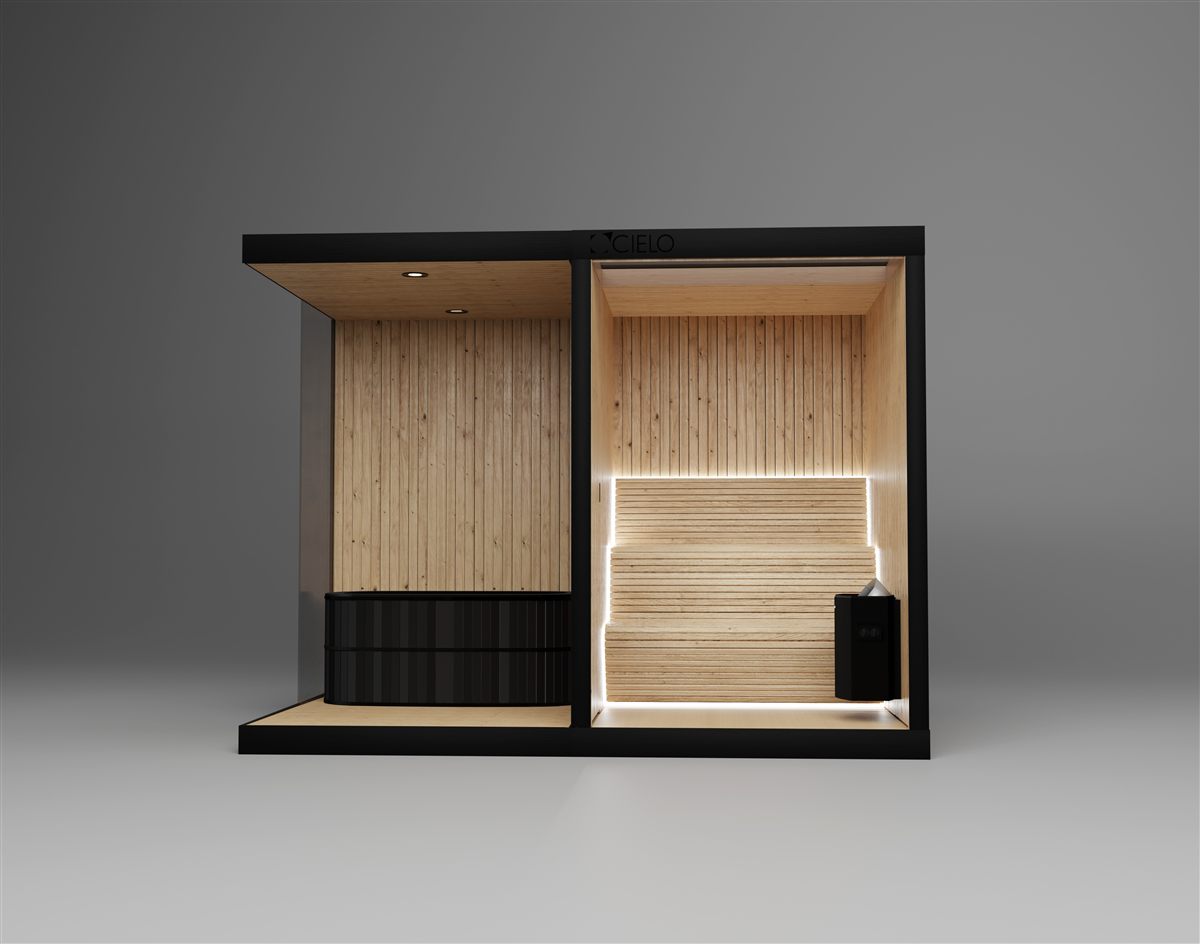
Frequently Asked Questions
Aim to finish your session roughly 1–2 hours before you plan to sleep, based on the passive-heating research above. This gives your body time to complete its cooling phase.
It can. A long or very hot session immediately before lights-out keeps your core temperature elevated at the wrong moment. Keep late-evening sessions shorter and moderate, or move the session earlier.
The sleep and thermoregulation research above wasn't conducted with either sauna type specifically — it used water-based heating. Both sauna types raise core temperature and should trigger a similar cooling response afterward; neither has dedicated large-scale sleep trials yet.
The relaxation and nervous-system shift after a sauna session is a plausible contributor to easier sleep onset for stress-driven insomnia, though this is a newer research area than the temperature-and-sleep-onset findings above.
Some regular users report that consistent heat exposure helps stabilize temperature regulation and reduce night sweats, but this should be discussed with a doctor rather than treated as an established treatment.
This is general information, not medical advice — talk to your doctor before starting sauna or cold plunge use, especially with cardiovascular conditions or pregnancy.