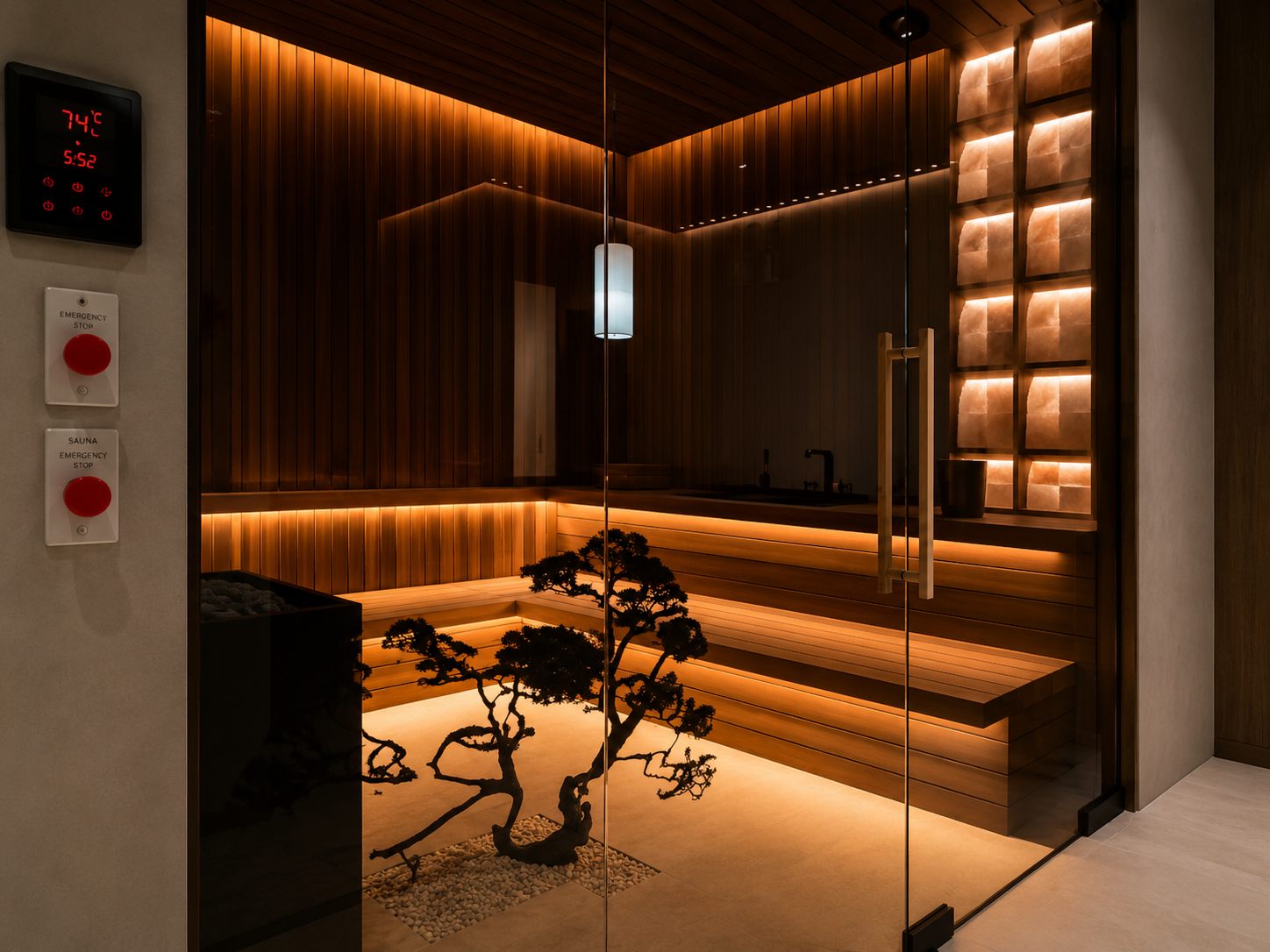
A sauna session doesn't relax you by skipping your stress response; it works by deliberately triggering it, in a controlled way, so your nervous system practices coming back down.
What Actually Happens to Your Stress Response in a Sauna
Heat is a genuine physical stressor. During a sauna session, your sympathetic nervous system — the "fight or flight" side of your autonomic nervous system — activates, heart rate rises, and stress hormones increase briefly. The relief doesn't happen during the heat; it happens afterward, once your body starts cooling and the parasympathetic nervous system — the "rest and digest" side — takes over.
- Heart rate rises
- Stress hormones briefly increase
- The nervous system's "fight or flight" side switches on
- The body cools and settles
- Vagal tone increases
- The "rest and digest" side takes over
This shift is part of the proposed mechanism behind the real cardiovascular benefits found in a 20-year Finnish population study covered in How Often Should You Really Use Your Sauna?: researchers pointed specifically to improved autonomic regulation, including increased vagal tone and reduced sympathetic activity, among frequent sauna users.
Why the Body's Reaction to Heat Mirrors a Stress Response
This pattern — a controlled stressor followed by a recovery phase — is the same underlying logic behind exercise-based stress resilience. Deliberately putting the nervous system through a manageable stress cycle, then letting it recover, is thought to be part of how the system becomes more efficient at regulating itself over time.
This is a directional finding from the research, not a guarantee for any individual session, but it's a genuinely different mechanism than simply "sitting somewhere warm and calming down."
What the Research Actually Shows
Alongside the cardiovascular and autonomic findings above, more recent research has specifically examined cortisol patterns around sauna use, including how salivary cortisol responses following sauna sessions change with repeated exposure over time, and broader reviews have looked at sauna bathing's role in stress and mental health recovery more generally. The pattern across this research points toward measurable, real changes in stress-hormone regulation with consistent use — though the exact magnitude varies by study and protocol, and this is an area of ongoing research rather than a single settled number.
How to Structure Sessions for Stress Relief, Not Just Heat
Consistency matters more than intensity here. The same frequency guidance that applies to sauna's broader health benefits applies to stress relief specifically — see How Often Should You Really Use Your Sauna? for the full frequency and duration breakdown. A realistic, sustainable pattern beats one long, intense session followed by weeks off — the nervous system benefit comes from the repeated practice of activating and then recovering, not from any single dramatic session.
Designed for real,
daily practice
Cielo is built around a simple idea: heat and cold exposure, used deliberately, is science associated with better cardiovascular health, faster recovery, improved sleep, and long-term resilience — not a spa-brand relaxation product.
A stress-relief ritual only works if it's genuinely easy to do consistently, which is why Cielo designs every completed project around real daily use, not an occasional indulgence.
Explore Custom Builds
Frequently Asked Questions
Both — the post-session shift toward parasympathetic ("rest and digest") activity is a real, measurable physiological change, not just a subjective feeling of calm.
Consistency matters more than any single session — a sustainable pattern of regular use, covered in full in How Often Should You Really Use Your Sauna?, is what the research actually tracks.
No — it's a controlled, temporary stressor, similar in concept to exercise. The relief comes from the recovery phase afterward, not from avoiding the heat stress itself.
Research in this specific area is growing, and early findings are promising, but it's an evolving area of study rather than a settled clinical treatment — talk to a doctor about anxiety specifically rather than relying on sauna use alone.
Sporadic, occasional use is less effective than a consistent routine. The nervous system benefit comes from repeated practice, not from one long session after a stressful week.
This is general information, not medical advice — talk to your doctor before starting sauna or cold plunge use, especially with cardiovascular conditions or pregnancy.