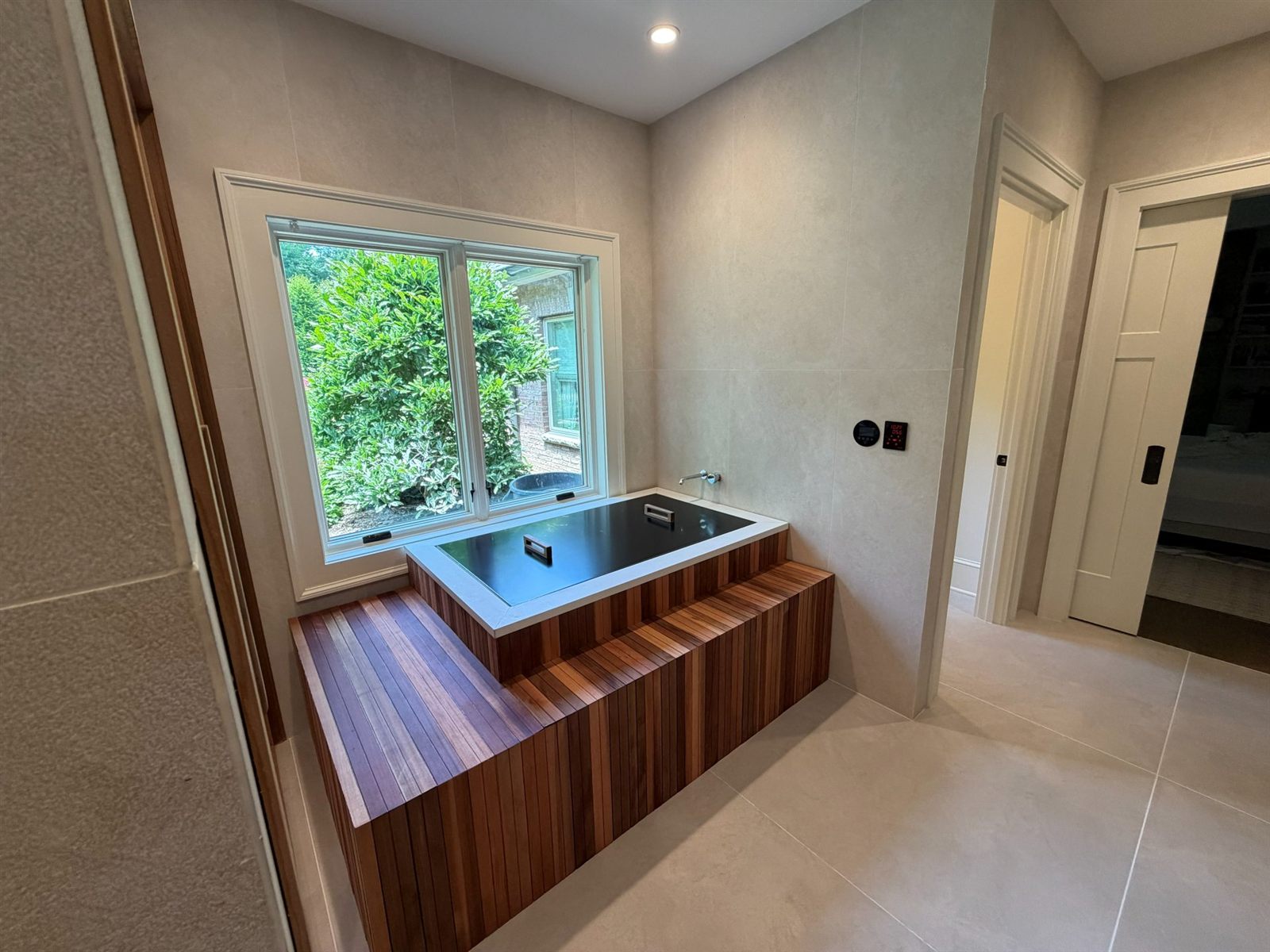
If you've hesitated on an indoor cold plunge specifically because of leaks, condensation, or a loud mechanical box next to your tub — those are real, reasonable concerns, and they're also well-understood engineering problems with real solutions, not reasons to rule out an indoor build.
That matters more somewhere like the NJ/NY/CT corridor specifically, where "defying the elements" isn't a marketing line — it's a real winter you'd otherwise have to plan an outdoor routine around.
Fear #1: Leaks — Why This Is a Waterproofing Problem, Not a Cold Plunge Problem
A cold plunge isn't meaningfully different from any other water fixture in a home — a soaking tub, a walk-in shower — from a waterproofing standpoint: a dedicated floor drain, a proper waterproof membrane, and drainage planned into the room's design from the start, not retrofitted afterward. The same drainage and waterproofing principles are covered in more depth in Bergen County Basement Wellness Sanctuary. The short version: leaks happen when this planning is skipped, not because a cold plunge is inherently harder to waterproof than any other fixture already in your bathroom.
Fear #2: Condensation — And Why NJ/NY/CT Winters Actually Make This Easier to Solve
For an indoor cold plunge in a climate that actually freezes, the standard engineering answer is a split-system configuration: the condensing unit lives outdoors, while the water-side components stay indoors where they're protected from freezing. That's a real advantage of a genuine winter climate, not a complication — the outdoor unit's heat-rejection side works efficiently in cold air, while the freeze-sensitive plumbing never leaves a conditioned space.
Condensation on the room side of the equation — humid air meeting a cold surface — is a ventilation question, not a plumbing one, and it's solved with the same properly engineered air-exchange approach covered in Bergen County Basement Wellness Sanctuary: a real ventilation plan, not an open window and hope.
Fear #3: Noise — What a Chiller Actually Sounds Like
This fear is usually based on an assumption, not a spec sheet. Standard residential cold plunge chillers typically run 40 to 55 decibels — roughly the sound of a refrigerator or a dishwasher — and "quiet series" systems built specifically for sound-sensitive spaces like hotel spas and wellness centers run under 60 decibels, which is the real high-end market standard.
Where noise is still a concern, the fix is mechanical, not aspirational: sound-insulating material around the unit (without blocking its airflow), a vibration-dampening base, and rubber gaskets at the plumbing connections to stop vibration from transferring into the floor itself.
The Real Differentiator: Custom Enclosures That Hide the Mechanicals Entirely
This is what separates a real build from a plastic tub with a loud box sitting next to it. A chiller can be built into custom, panel-ready cabinetry matched to the room's existing millwork and trim — the same design logic used for a concealed refrigerator panel in a high-end kitchen — so the mechanical system disappears visually while staying fully accessible for service.
Combined with the noise mitigation above, this is what actually turns "a tub with equipment next to it" into a room that reads like a five-star spa, usable in any season regardless of what's happening outside.
One coordinated problem,
not three separate ones
Cielo is built around a simple idea: heat and cold exposure, used deliberately, is science associated with better cardiovascular health, faster recovery, improved sleep, and long-term resilience — not a spa-brand relaxation product. Leaks, condensation, and noise are solved as one coordinated design and engineering problem at Cielo, not three separate concerns handled by whoever happens to be on site that day.
See Completed Projects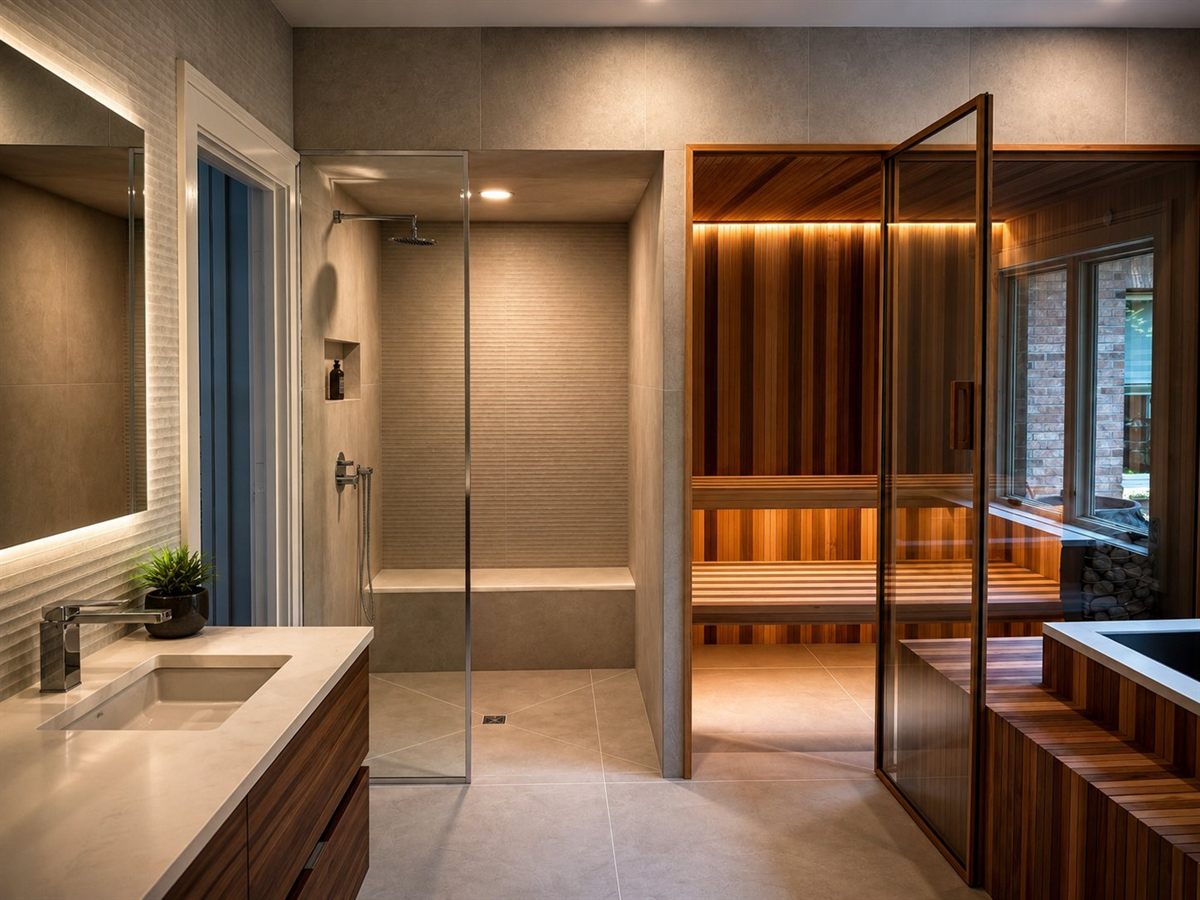
Frequently Asked Questions
It's safe with proper waterproofing — a dedicated floor drain and waterproof membrane planned from the start, the same standard used for any indoor water fixture. Leaks happen when this planning is skipped, not because indoor cold plunges are inherently leak-prone.
Standard units run 40–55 decibels, comparable to a refrigerator or dishwasher. Quiet-tier systems built for sound-sensitive spaces run under 60 decibels — at or below normal conversation volume.
Yes — a split-system setup, with the condensing unit outdoors and the water-side components indoors, is the standard approach for freezing climates like the NJ/NY/CT area, protecting the freeze-sensitive parts while the outdoor unit runs efficiently in cold air.
Yes — custom, panel-ready cabinetry matched to the room's existing millwork can fully conceal a chiller while keeping it accessible for service, the same approach used for concealed refrigerator panels in high-end kitchens.
Not meaningfully — the same basic filtration and water-change principles apply either way. Indoor placement adds waterproofing and ventilation planning, not ongoing maintenance burden.