
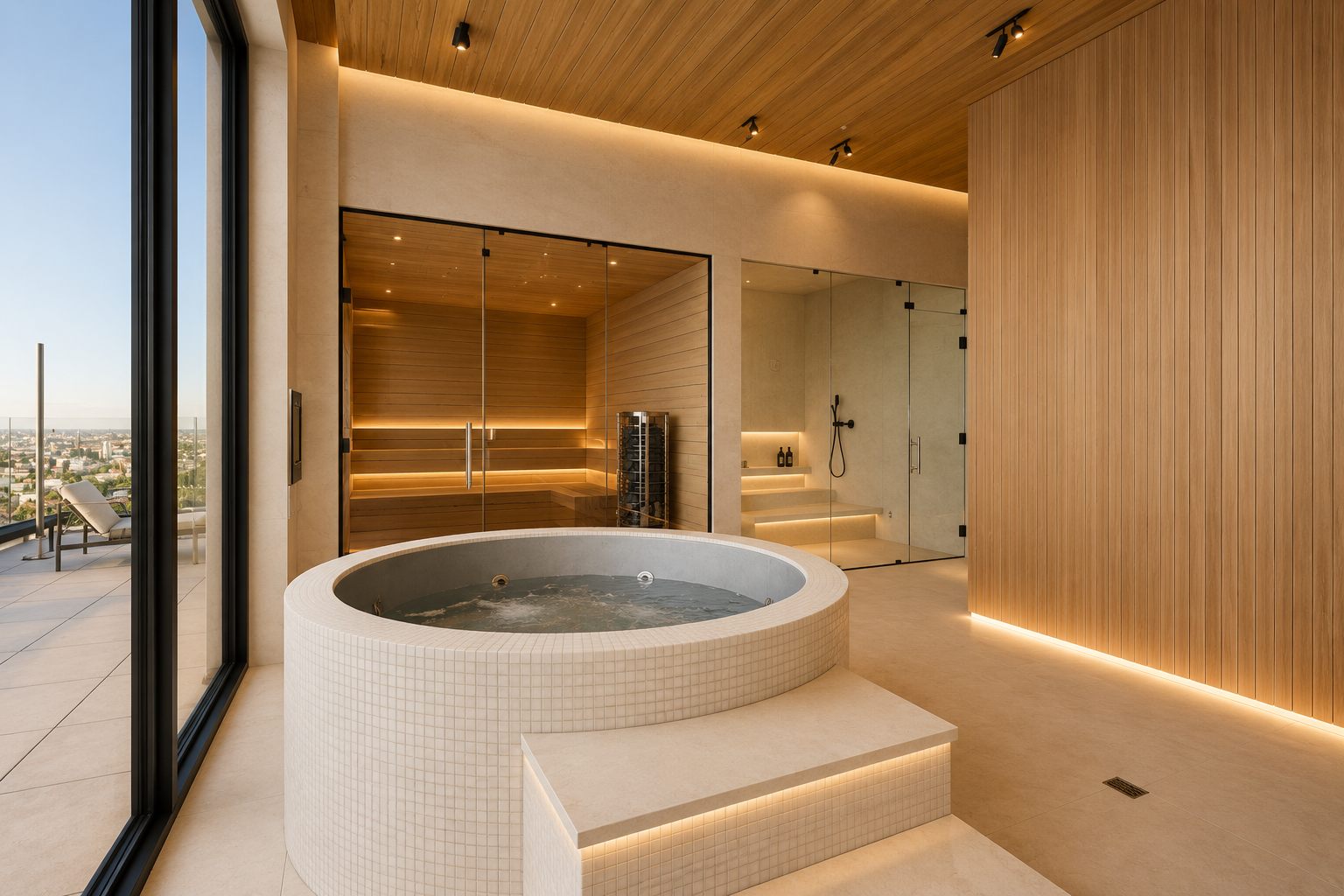
If you're already serious about longevity - tracking recovery, optimizing sleep, investing real money in what actually works - a sauna and cold plunge you have to drive to is working against the one variable that matters most: consistency. Here's why proximity beats a better single session, what "clinic-grade" materials and filtration actually mean in a home build, and how this fits into a New Jersey home specifically.
Why Daily Access Beats a Better Session
The strongest longevity data is a frequency finding, not a single-session one - and frequency only happens reliably when the sauna is a few steps away, not a scheduled trip.
The strongest human longevity data on sauna use is a frequency finding, not a single-session one - men using a sauna 4 to 7 times a week saw the largest reductions in all-cause mortality in the same Finnish cohort study covered in full in Sauna and Longevity. Hitting that frequency reliably requires the sauna to be a few steps away, not a scheduled clinic visit or a drive to a wellness center. A longevity practice built around a resource you have to travel to rarely survives contact with a busy week - the honest infrastructure problem behind most abandoned wellness routines.
What "Clinic-Grade" Actually Means: Materials Built for Daily Use
A space used daily needs to be built for daily use, not occasional indulgence. Kelo wood - a standing dead Finnish pine that dries naturally over 80 to 100 years in a subarctic climate before harvest - is one of the premium options available for a build like this: it needs no chemical treatment since it naturally resists insects and fungal growth, doesn't warp or twist since it's already fully seasoned, and carries a distinctive grey-and-reddish grain that ages rather than degrades. It's also a genuinely sustainable choice, since no live trees are felled to produce it.
Paired with insulated glass and aluminum framing, this is construction meant to hold up to years of near-daily sessions, not a few weekends a year.
Cold Plunge Engineering for Daily Use: Filtration That Actually Matters
Water quality is the part of a daily cold-plunge habit most people don't think about until it becomes a maintenance problem. Real cold plunge chillers use ozone, UV-C, or mechanical filtration - often more than one in combination for redundancy.
With an active ozone-plus-UV system and a working filter, a single-user home setup can typically go 4 to 8 weeks between full water changes instead of needing frequent full drains. For a daily user, that's the difference between a plunge you actually use every morning and one that becomes a chore to maintain. The same physiological reasons consistent water temperature matters are covered in Cold Plunge 101.
The Architecture of a Daily Ritual, Not a Wellness Vacation
The whole premise of an in-home longevity clinic is treating the sauna and cold plunge as real infrastructure, not decor you visit occasionally. For a New Jersey home specifically, that often means an indoor or basement build - which brings its own real requirement: New Jersey requires a 7-foot minimum ceiling height for finished, habitable basement space, the same code covered in Indoor Sauna Installation in New Jersey.
Worth noting directly: this article isn't about "sauna detox" claims you may have seen elsewhere - for the honest science on that specific question, see Does a Sauna Really Detox Your Body?
The real case for a daily practice is the longevity and cardiovascular research, not a cleanse.
Built for the frequency
the research points to
Cielo is built around a simple idea: heat and cold exposure, used deliberately, is science associated with better cardiovascular health, faster recovery, improved sleep, and long-term resilience - not a spa-brand relaxation product. Building the highest-value frequency in the research into something genuinely easy to sustain is the entire premise of an in-home longevity clinic, built with materials and filtration engineered for daily use rather than occasional visits.
See Completed Projects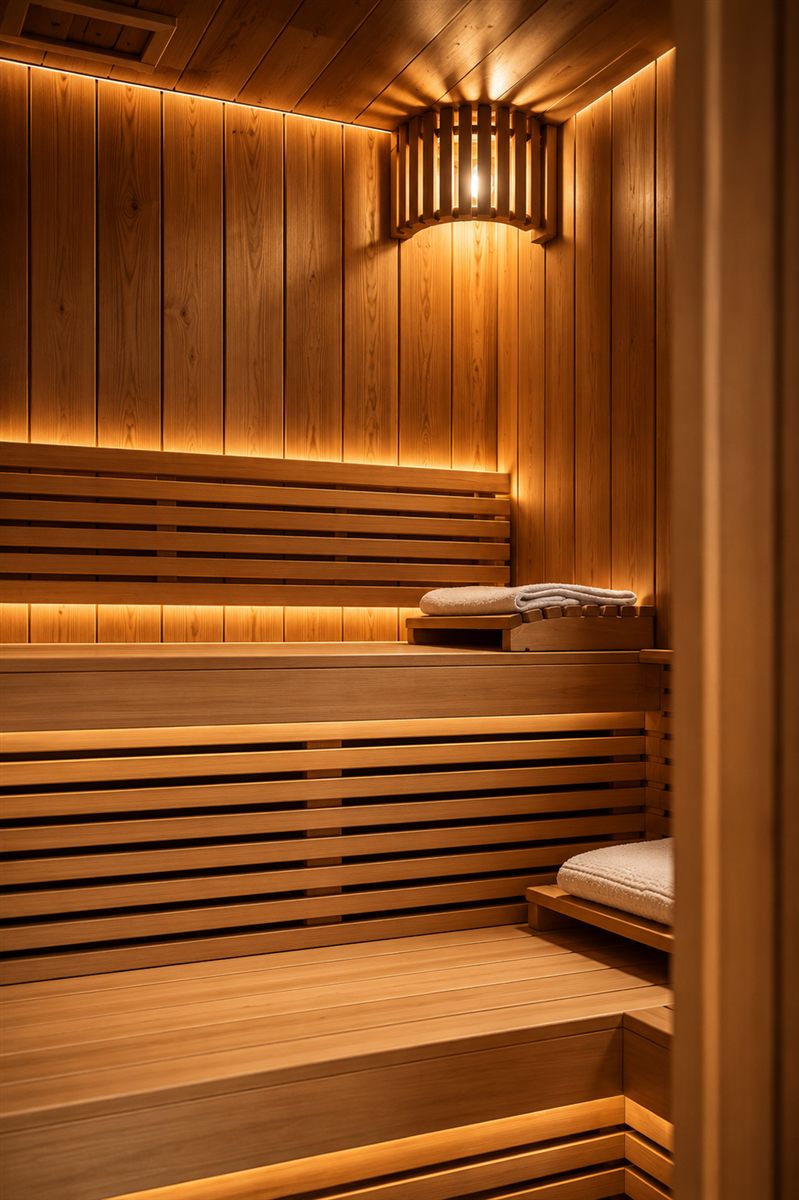
Cielo designs in-home longevity builds for homeowners across New Jersey, engineered for each property's specific space, ceiling height, and daily routine - not a standard kit dropped into a spare room.
Frequently Asked Questions
Materials and systems built for daily, not occasional, use - premium woods like Kelo or clear cedar, insulated glass and aluminum construction, and cold plunge filtration (ozone/UV/mechanical) that keeps water clean between sessions without constant draining.
Not objectively better - it's a different premium option. Kelo is naturally weather- and pest-resistant standing dead pine with a distinctive aged grain, while clear cedar is a widely used, reliable premium sauna wood in its own right. Both hold up well to regular use.
With an active ozone-plus-UV filtration system and a working mechanical filter, single-user home systems can typically go 4 to 8 weeks between full water changes, compared to much more frequent draining without filtration.
The human evidence is real and substantial - a 20-year Finnish cohort study links frequent sauna use to significantly lower all-cause mortality and dementia risk. The full research breakdown, including where the evidence is strongest and where it's still early, is covered in Sauna and Longevity.
Either works. A basement build needs to clear New Jersey's 7-foot minimum ceiling height code for finished habitable space, covered in Indoor Sauna Installation in New Jersey - beyond that, it's a matter of available square footage and personal preference.
This is general information, not medical advice - talk to your doctor before starting sauna or cold plunge use, especially with cardiovascular conditions or pregnancy.