

If you've wondered whether a sauna will sweat out toxins, the honest answer is: partly true, mostly overstated. Real research has found trace amounts of heavy metals like lead and cadmium in sweat, but sweat isn't your body's main detox pathway - your liver and kidneys do that work, continuously, at a much larger scale than a single sweat session ever could. What sauna use is genuinely well-documented for is something different, and arguably more valuable: measurable cardiovascular and longevity benefits from a real, decades-long population study.
What's Actually in Your Sweat?
Sweat is roughly 99% water, with the rest made up of electrolytes like sodium and potassium, plus small amounts of urea and other metabolic byproducts. It's produced primarily to cool the body down, not to eliminate waste - that's a secondary, incidental effect, not sweat's main job.
Where the "sauna detox" idea gets its footing is in a smaller body of research on trace elements: several studies have detected measurable amounts of heavy metals in sweat collected during exercise or sauna sessions. That's real. What's less settled is whether it adds up to anything meaningful for your health.
Does Sweating Really Remove Heavy Metals and Toxins?
Some peer-reviewed research supports this, with real limits worth knowing. A study of 12 healthy adults measured nickel, lead, copper, arsenic, and mercury in sweat collected during both treadmill running and sauna exposure. Both conditions produced measurable amounts of each metal, but the differences were striking: lead came out at 52.8 μg/L after exercise versus 4.9 μg/L after a sauna session, and nickel showed a similar gap (57.3 μg/L versus 5.2 μg/L). Mercury was the one exception, with no meaningful difference between the two. The study's authors also pointed to earlier research suggesting metal concentrations in sweat can run 10 to 30 times higher than in blood or urine, though this particular study didn't measure blood or urine directly to confirm that comparison for its own subjects.
A related systematic review pooled findings from 24 separate reports on arsenic, cadmium, lead, and mercury in sweat, after screening more than 120 candidate studies down to the ones that actually met its criteria. It confirmed these elements are genuinely detectable in sweat, but the range it found was enormous: lead levels ran as high as 283 μg/L in people without occupational exposure, and up to 17,700 μg/L in workers exposed to lead on the job - a difference the reviewers attributed to individual variation in body burden, genetics affecting detox efficiency, and physiological state, not to sauna use itself. That's the honest caveat behind every "sauna detox" claim: the amount that shows up depends far more on who you are and what you've been exposed to than on how long you sit in the heat.
Dynamic exercise mobilized more nickel, lead, and copper into sweat than sitting in a sauna did in the same study - if heavy-metal excretion specifically is your goal, movement may matter as much as heat, or more.
Why Your Liver and Kidneys Do the Real Detox Work
Your liver metabolizes and neutralizes toxins, and your kidneys filter your blood and excrete waste through urine - both organs process far more volume, continuously, than sweat glands ever will. To put a number on it: your liver filters more than 250 gallons of blood every day, according to the Cleveland Clinic, breaking down toxins so they leave the body through urine and stool. Your kidneys handle a separate, equally continuous job, filtering about 150 quarts of blood daily and returning nearly all of it to circulation, according to the National Institute of Diabetes and Digestive and Kidney Diseases. Sauna sweating isn't a replacement for that system; at best, current research suggests it may be a small, complementary pathway for a narrow set of substances, not a general-purpose cleanse. A mainstream hospital-system review of this exact question reaches the same conclusion.
So does the sauna detox your liver, specifically? Not in any way the research has demonstrated. Heat exposure raises your heart rate and increases blood flow to your skin, but there's no evidence it changes how much work your liver does or how well it does it. Your liver runs its 250-gallon-a-day filtration job on its own schedule, driven by your body's ongoing metabolism, not by how often you use a sauna. A sauna session might make you feel lighter or more relaxed, and that's a real, worthwhile effect, but it isn't your liver working any harder or more efficiently than it already does around the clock.
What the Research Actually Supports About Sauna Use
This is the part most "sauna detox" content skips entirely, and it's a stronger case than the detox claim: a Finnish population study of 2,315 middle-aged men, published in JAMA Internal Medicine, tracked sauna habits from the mid-1980s through 2011 and found a clear, dose-dependent relationship between sauna frequency and cardiovascular outcomes. Men who used a sauna 2 to 3 times a week had a 23% lower risk of fatal coronary heart disease or cardiovascular disease than men who used one only once a week, and men at 4 to 7 times a week saw that risk drop by 48%. Researchers point to mechanisms like improved autonomic nervous system balance and reduced inflammatory markers as likely explanations.
None of that is about detox. It's a real, replicated finding about heat exposure and cardiovascular health - arguably the stronger reason to build a regular sauna habit in the first place. We cover the full picture in The Science-Backed Benefits of Sauna Use and Sauna for Heart Health.
What Are Sauna Detox Benefits, Really?
Strip away the marketing language and there are really two separate findings buried inside the phrase "sauna detox benefits," and they're not equally strong. The first is the trace heavy-metal finding covered above: real, measurable, but modest and highly variable between individuals, and not something a single session reliably delivers in any predictable amount. The second is the cardiovascular finding: a large, decades-long population study showing a genuine, dose-dependent drop in fatal heart disease and all-cause mortality tied to sauna frequency.
If you're looking for the actual, evidence-backed benefit of a regular sauna habit, it's the second one, not the first. Trace-metal excretion is a real but minor side effect of sweating; the cardiovascular finding is a major, replicated result that holds up under the same scrutiny a "detox" claim usually can't survive. The honest version of "sauna detox benefits" isn't detox at all - it's a heart-health habit that happens to make you sweat along the way.
What Sauna Use Is Not a Substitute For
None of the research above makes a sauna a medical detox tool, and it's worth being direct about where the line sits. Sauna use is not a substitute for a supervised medical detox program, and it should never be used as a way to manage alcohol or drug withdrawal, which can involve serious, sometimes life-threatening physiological changes that require medical monitoring, not heat exposure. It's also not a treatment for kidney or liver disease; if either organ is already compromised, added heat stress and fluid loss can be genuinely risky rather than helpful, which is exactly why anyone with a kidney or liver condition should talk to a doctor before starting a sauna habit, not after.
Used as intended, alongside a real medical plan rather than instead of one, a sauna is a low-risk, well-studied habit. Used as a replacement for treatment it was never designed to provide, it isn't.
So Is "Sauna Detox" a Myth?
Not a myth, exactly - more of a half-true story that skips the more interesting half. Trace elements do show up in sweat, and that's a genuinely documented finding. But treating a sauna session as a "cleanse" overstates what a single session does, and understates what a consistent sauna habit is actually associated with: better cardiovascular markers, over years, in a real population.
Built for the habit,
not the hype
Cielo doesn't market its saunas as a detox product, because the honest science doesn't support that framing - and overselling it would work against the kind of long-term trust a daily ritual is supposed to build.
What Cielo builds is a space designed for consistent use: real cedar, insulated glass, and a heater built to hold steady, precise heat, because the research that actually holds up is about regular, sustained sauna habits, not one dramatic sweat session.
Explore Custom Builds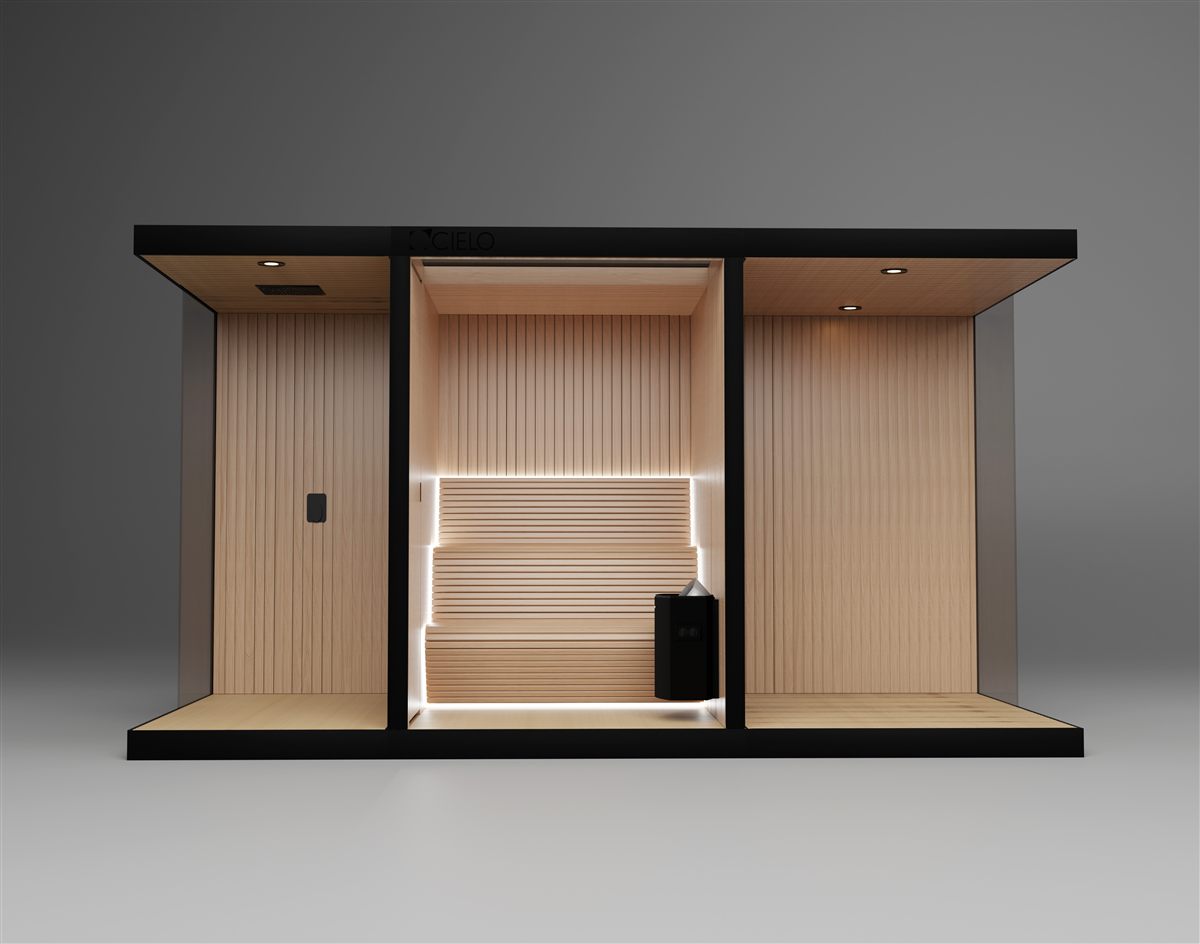
Frequently Asked Questions
In a limited sense - some studies have found trace heavy metals like lead and cadmium in sweat. But your liver and kidneys handle the large majority of the body's actual detoxification, and there's no strong evidence that a single sauna session meaningfully "cleanses" the body.
Research has detected small, highly variable amounts of certain heavy metals (lead, cadmium, arsenic, mercury) in sweat. The amounts differ enormously between individuals, and researchers haven't fully explained why.
There isn't strong evidence that either type is meaningfully better for toxin removal specifically. The research showing sweat contains trace elements doesn't distinguish sharply between infrared and traditional heat sources.
The best-documented benefit is cardiovascular: a long-term Finnish study found frequent sauna users had significantly lower rates of fatal heart disease and sudden cardiac death than infrequent users, tracked over roughly two decades.
No, not in any way current research has shown. Your liver continuously filters over 250 gallons of blood a day on its own, regardless of sauna use, and there's no evidence that heat exposure increases how much toxin-processing work it does. A sauna habit offers real benefits, but they're cardiovascular, not hepatic.
The real, evidence-backed benefit isn't detox at all: it's the well-documented drop in cardiovascular mortality tied to regular sauna use. The trace heavy metals found in sweat are real but minor and highly variable between people; the heart-health finding is the major, replicated result worth building a habit around.
Yes - rinsing off after a sauna is good hygiene regardless of any detox effect, since it clears sweat, salt, and skin oils.
This is general information, not medical advice - talk to your doctor before starting sauna or cold plunge use, especially with cardiovascular conditions or pregnancy.