

If you train hard enough that recovery is the actual bottleneck on your progress — post-exercise sauna use has real sports-science support behind it, with measured improvements in endurance performance and physiological markers tied to recovery in trained athletes, not just the subjective "feels good" effect most people associate with heat. The catch is timing: when you use it matters as much as whether you use it.
What does sauna use actually do for a fatigued muscle?
Heat exposure increases blood flow to fatigued tissue, which helps clear metabolic byproducts built up during a hard training session, and it triggers heat shock proteins — a family of molecules that help repair exercise-damaged muscle protein and moderate the inflammation that follows intense training. This is the same mechanism covered in more depth in The Science-Backed Benefits of Sauna Use; here, the focus is specifically on what it means for athletic performance and recovery.
Is there real research on sauna use and athletic performance?
Yes, and one study in particular is worth knowing in detail. Scoon et al. studied six male distance runners who used a sauna immediately after training for roughly 30 minutes per session, 3 times a week over 3 weeks.
Six male distance runners · Scoon et al.
The proposed driver was blood volume expansion, which improves the body's capacity to deliver oxygen and manage heat during exercise. It's worth being honest about scale here: this was a small study (six runners), and it measured a specific adaptation — heat acclimation and plasma volume — more than direct "muscle repair."
Later research, including work by Stanley et al., has continued to explore heat acclimation markers like this in athletes, and the consistent finding across these studies is that heat acclimation from post-exercise sauna use builds up over about three weeks of regular use, after which additional sessions add less benefit.
Does sauna use reduce soreness after a hard workout?
This is where the evidence is more mechanistic than it is a large randomized trial. The heat shock protein response is well documented to support repair of exercise-damaged muscle fibers and to help regulate the inflammatory response that produces next-day soreness. Athletes in smaller studies and structured training programs report reduced perceived soreness and improved recovery markers with regular post-training sauna use, consistent with that mechanism.
This is a case where the biological explanation is stronger than the volume of large-scale controlled trials — a well-supported, plausible benefit rather than a settled, precisely-quantified one.
When should you actually use the sauna — right after training, or later?
Most of the research uses a sauna session immediately or shortly after training, which is also when the heat-acclimation and plasma-volume adaptations shown by Scoon et al. were measured. For pure muscle repair rather than performance adaptation, some athletes prefer a session 24–48 hours after a hard session, giving the initial inflammatory repair process time to start before adding another heat stressor.
Both approaches have a rationale behind them; which one to prioritize depends on whether your goal is next-day soreness or longer-term heat-adapted performance.
Built for the cadence
recovery actually requires
Every study above depended on consistent, repeated sessions — 3 times a week for 3 weeks in the Scoon study, and heat acclimation research generally requires that kind of regularity to see the plasma volume and performance changes. That's a hard cadence to maintain around someone else's schedule, whether that's a gym sauna or a shared facility.
A Cielo sauna at home means the post-training session happens the same day, every time, without becoming its own logistical project — which is the difference between a recovery protocol you actually run for three weeks and one you mean to start after the season.
Recover Like an Athlete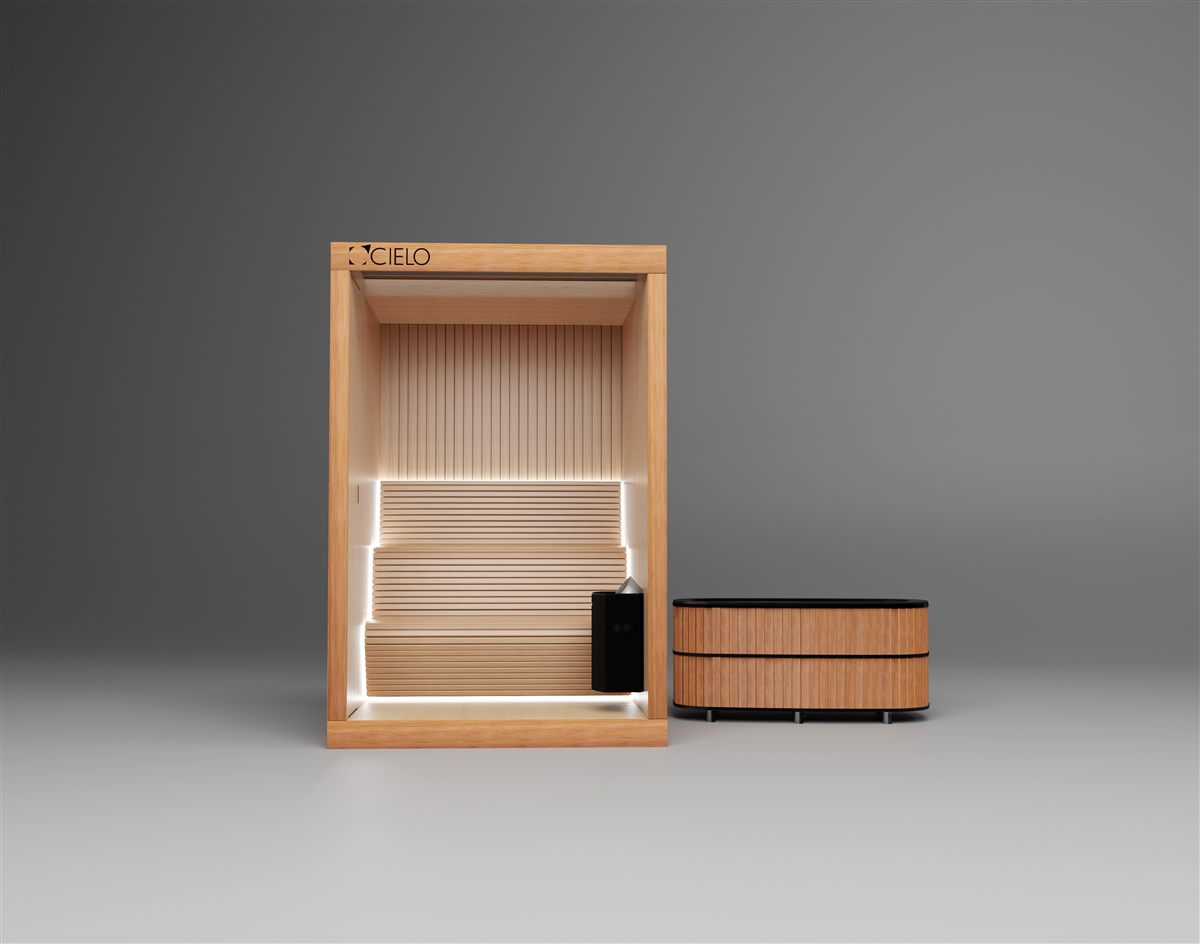
Frequently Asked Questions
Both have research behind them for different goals: immediately post-workout is what heat-acclimation and performance studies used; 24–48 hours later is what some athletes prefer specifically for muscle repair, giving initial inflammation time to start working.
The clearest performance study used roughly 30-minute sessions, 3 times a week, for 3 weeks, with most of the adaptation showing up in that window. Consistency across weeks mattered more than any single long session.
There's a real mechanism — heat shock proteins supporting muscle repair and inflammation regulation — but the amount of large-scale controlled research quantifying soreness reduction specifically is still smaller than the research on performance and heat acclimation.
No — heat and cold work through different, complementary mechanisms typically studied and used together as contrast therapy.
No — it's a complement to your recovery routine, not a replacement for the fundamentals (sleep, nutrition, mobility work) that still do most of the heavy lifting.
The heat shock protein and blood-flow mechanisms are consistent with reduced DOMS, and athletes commonly report this benefit, but DOMS specifically hasn't been isolated and measured in the same controlled way as the performance and plasma-volume findings above.
No — the studies above used trained runners, but the underlying mechanisms (blood flow, heat shock protein activation, heat acclimation) apply to any regularly training body, from weekend athletes to competitive ones.
This is general information, not medical advice — talk to your doctor before starting sauna or cold plunge use, especially with cardiovascular conditions or pregnancy.