
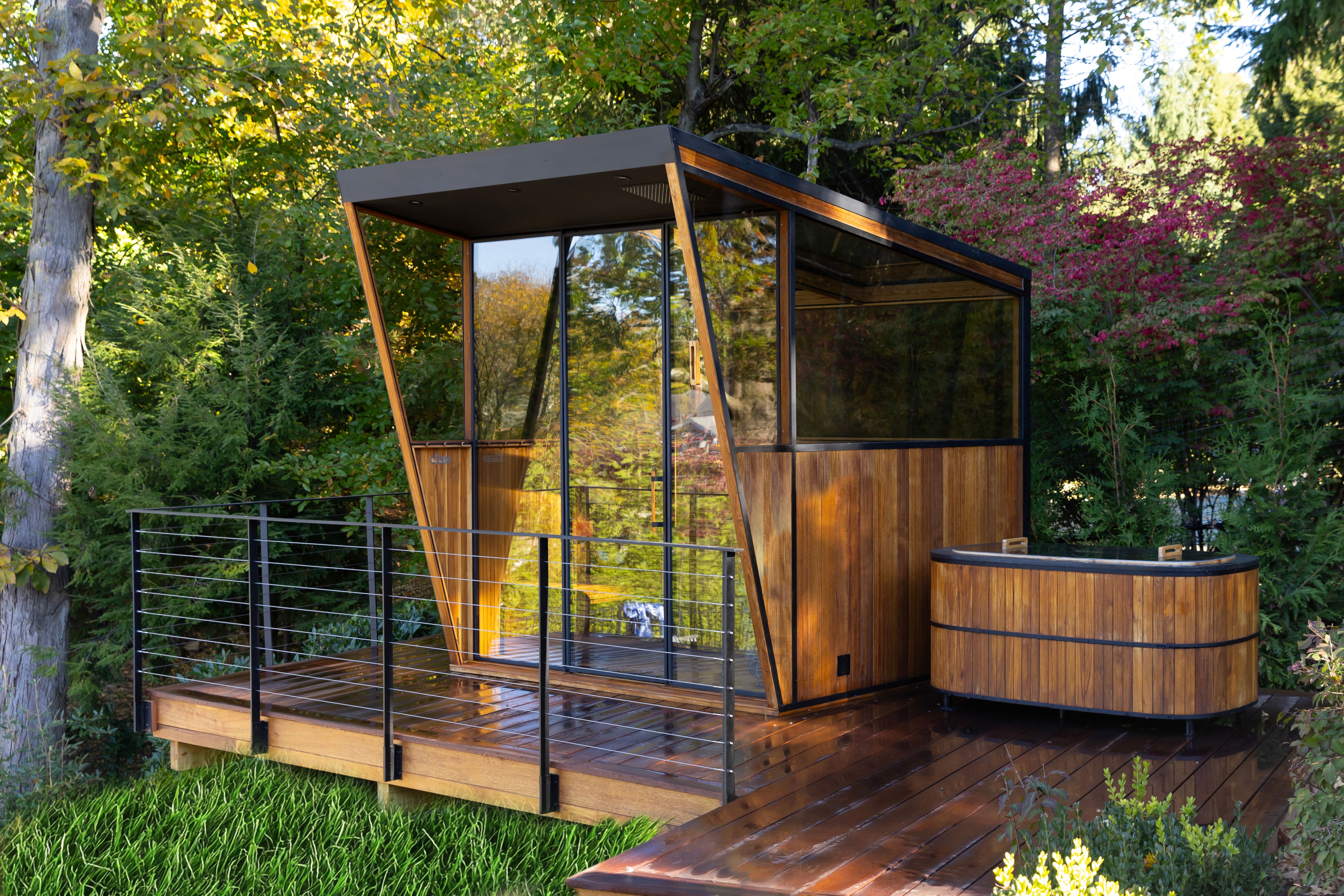
If you're a homeowner in New Jersey - Bergen County, the Jersey Shore, anywhere in between - thinking seriously about an outdoor sauna, the question that actually matters isn't "which sauna is best." It's whether the build accounts for New Jersey's permitting rules, frost line, and electrical code, and whether the price you're quoted reflects what a real installation costs here, not a national average pulled from nowhere in particular.
What Actually Requires a Permit for an Outdoor Sauna in New Jersey?
Most outdoor structures in New Jersey need a construction permit - but there's a narrow exemption worth knowing about. Under the state's Uniform Construction Code (UCC), a structure accessory to a home doesn't need a construction permit if it's 200 square feet or less, 10 feet or less in height, and has no water, gas, or sewer connection.
In practice, this exemption rarely covers a real outdoor sauna. Most sauna builds involve an electrical circuit for the heater at minimum, and often a shower or ice bath with a water line - either one moves the project out of the shed-sized exemption and into full permit territory. Even when a structure is small enough to qualify, New Jersey still requires a separate zoning permit to confirm placement meets your town's setback and lot-coverage rules. Skipping either step is what causes problems later - at resale, or with your homeowner's insurer if something goes wrong.
Electrical Permits: What a Sauna Heater Actually Requires
A sauna heater runs on a dedicated 240V circuit, and any new circuit in New Jersey requires an electrical permit under the UCC - there's no size exemption for this part. Homeowners with a single-family detached home can typically pull their own electrical permit, but condos, townhouses, and homes under an association typically require a licensed New Jersey electrician regardless.
Outdoor electrical work also has to meet code for weatherproof enclosures, GFCI protection on every outdoor circuit, and proper burial depth for any underground wiring. This isn't paperwork for its own sake: unpermitted electrical work can void a homeowner's insurance claim if something goes wrong, and it shows up as a red flag during a home inspection if you sell.
Foundations and New Jersey's Frost Line
New Jersey's frost line depth is typically 36 inches, with some southern coastal areas (Monmouth and Burlington counties and south) permitted to use 30 inches with proper documentation - Bergen County and the rest of North Jersey generally fall under the standard 36-inch requirement. Footings poured above the frost line are exposed to the ground's seasonal freeze-thaw cycle, which can lift a foundation a fraction of an inch at a time until the structure is visibly out of level.
This is one of the most overlooked parts of an outdoor sauna build, because it's invisible until it isn't.
On a recent Cielo build, footing depth was one of the first specs locked in before any structural framing began - not an afterthought bolted on to satisfy an inspector. Your local building department has the final word on the exact depth required for your specific town.
Zoning and Lot Coverage: What Varies Town to Town
This is the part every generic sauna guide skips, and it's the part that actually determines whether your project sails through or stalls. New Jersey's UCC is statewide, but zoning is written town by town. Most Bergen County municipalities cap total lot coverage - building footprint, decks, and accessory structures combined - at somewhere between 20% and 30% of the lot, and sheds and accessory structures are consistently barred from front-yard placement across the state.
Some towns go further than you'd expect: certain zoning codes explicitly exclude a sauna, hot tub, or indoor shower from what qualifies as a simple "cabana" structure, which can push a sauna build into a different permit category than a plain storage shed of the same size. None of this is universal - it's set by each municipality - which is exactly why Cielo confirms local zoning before any build starts, rather than assuming one town's rules apply to the next.
What Does a Custom Outdoor Sauna Actually Cost in New Jersey?
Most cost guides give you a single national number that means very little once you're actually comparing quotes. Here's a real breakdown, based on the actual cost categories from a recent Cielo build - not a marketing estimate:
The single biggest lever on final cost isn't the sauna itself - it's how much custom glass, ice bath, and site-specific work is layered on top of the base structure. That's also why Cielo prices every project individually rather than quoting a flat "starting at" number that rarely survives a real site visit.
What This Looks Like Built: Real Cielo Projects in New Jersey
Cielo has built custom sauna and cold plunge installations across New Jersey, including a recent project in Oakhurst, NJ. These aren't renderings - they're real backyards, with real site constraints (property lines, existing landscaping, electrical runs) worked out during the build, not glossed over in a sales deck.
Built for New Jersey's
actual climate and code
Cielo builds every sauna from clear cedar, insulated glass, and aluminum - materials chosen because they hold up outdoors in New Jersey's actual climate, not a mild-weather showroom. Because Cielo manages the structure, the electrical scope, and the permitting conversation together, homeowners aren't left coordinating between three separate contractors who've never talked to each other.
Explore Custom Builds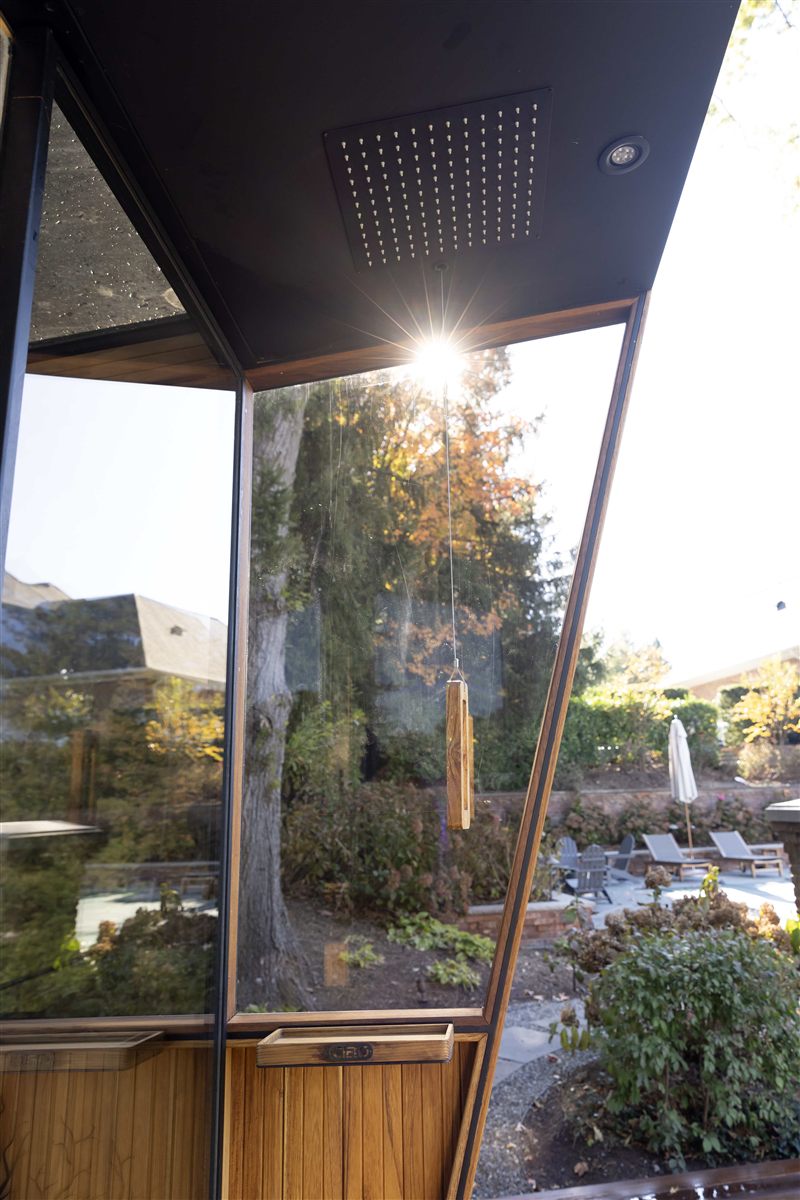
Frequently Asked Questions
Almost always, yes - either a full construction permit or, at minimum, a zoning permit plus an electrical permit for the heater circuit. The narrow shed-sized exemption in the UCC rarely applies once electrical or plumbing is involved.
It depends heavily on size, glass, and whether an ice bath is included, but real project breakdowns typically run from the high five figures for a sauna-only build to well over six figures with a full ice bath and chiller system.
Cielo manages the structural design and coordinates the electrical scope with a licensed New Jersey electrician; zoning and permit specifics are confirmed with each client's local municipality before the build starts, since requirements vary by town.
New Jersey's frost line is typically 36 inches, with some southern coastal areas permitted to use 30 inches with proper documentation. Footings need to go below the applicable depth to avoid frost heave over time.
This varies by municipality and project scope - ask your Cielo consultation for a timeline specific to your town and design.
Permit and zoning rules are municipality-specific - confirm current requirements with your local building department before starting a project.